
WhatsApp Marketing: Turn Conversations into Customers
WhatsApp can be an important customer communication channel for modern businesses. Learn how to set up WhatsApp Business, organise enquiries, use catalogues, automate suitable responses and build better customer relationships.
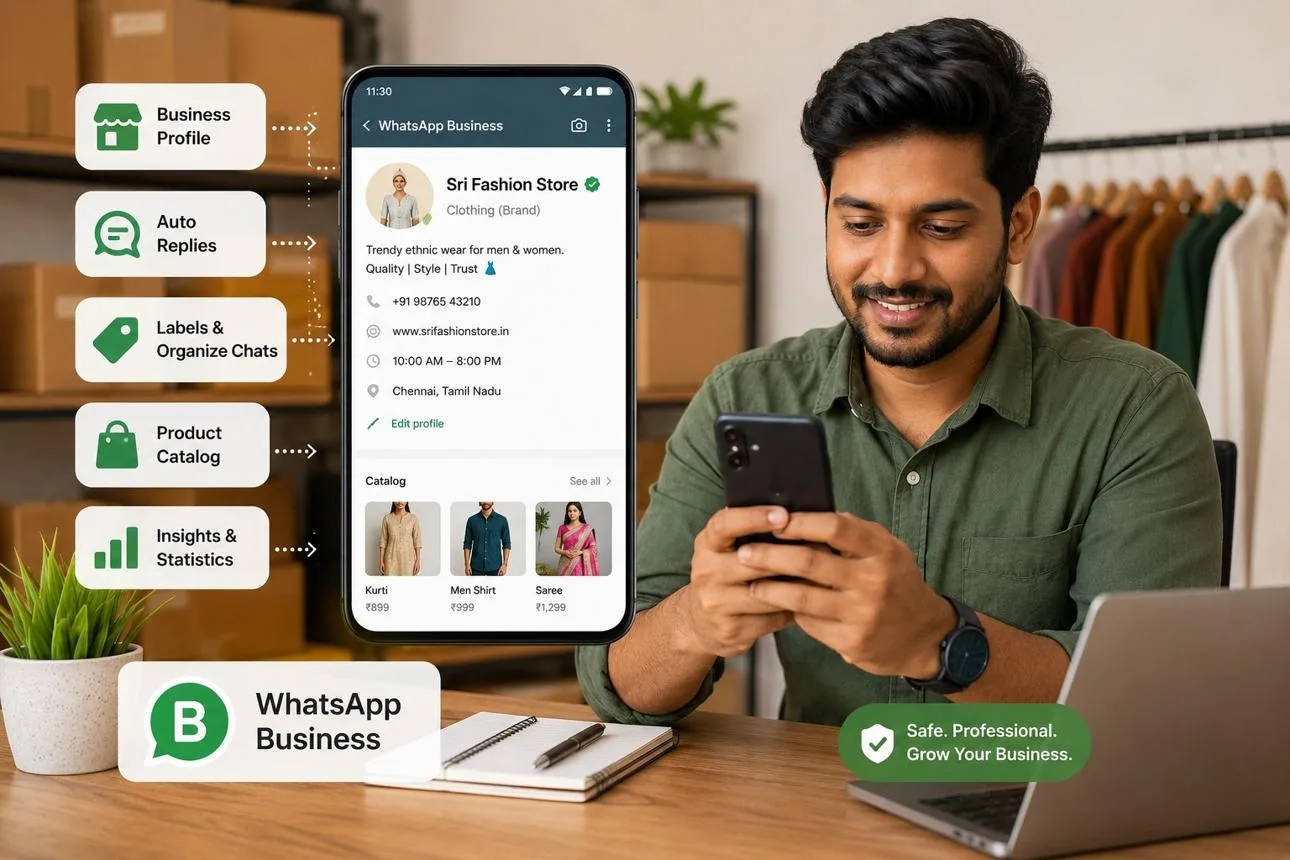
For many customers, sending a WhatsApp message is easier than filling out a long enquiry form or making a phone call.
Businesses can use WhatsApp to answer questions, share product information, provide updates and maintain customer relationships.
But receiving messages is only the beginning. Businesses need an organised process to respond, manage enquiries and move interested customers towards the next step.
In this guide, we explore how WhatsApp marketing can support customer communication and business growth in 2026.
1. What Is WhatsApp Marketing?
WhatsApp marketing is the use of WhatsApp communication tools to share relevant business information and interact with customers.
Depending on the business requirements, it can involve:
WhatsApp Business.
Business profile information.
Product catalogues.
Quick replies.
Labels and conversation organisation.
Click-to-WhatsApp advertising.
WhatsApp Business Platform integrations.
Automated customer communication.
The objective is to make business communication convenient, organised and relevant.
2. WhatsApp Business vs WhatsApp Business Platform
Businesses should understand the difference between the standard WhatsApp Business app and the WhatsApp Business Platform.
WhatsApp Business App
Suitable for many small businesses that manage customer conversations directly.
Features may include:
Business profile.
Catalogue.
Quick replies.
Labels.
Greeting messages.
Away messages.
WhatsApp Business Platform
Designed for businesses that need more structured integrations, larger-scale messaging workflows or communication through supported software providers.
Depending on the setup, it can support:
Approved message templates.
Customer support workflows.
CRM integrations.
Automated notifications.
Multi-agent communication through compatible solutions.
Platform access, pricing and messaging rules should be checked through official WhatsApp documentation.
3. Set Up a Professional Business Profile
Your WhatsApp profile should help customers understand who they are contacting.
Include:
Correct business name.
Logo or suitable profile image.
Business description.
Contact details.
Website.
Business address where relevant.
Operating hours.
Product or service information.
Keep information accurate and consistent with your other business channels.
4. Use Product and Service Catalogues
A catalogue can help customers explore products or services without requesting every detail separately.
Include:
Clear product or service names.
Accurate descriptions.
Good-quality images.
Prices where appropriate.
Relevant product information.
Review the catalogue regularly so that customers do not receive outdated information.
5. Organise Enquiries with Labels
Businesses receiving multiple enquiries need a simple system for managing conversations.
Possible categories include:
New enquiry.
Follow-up required.
Interested customer.
Quotation shared.
Payment pending.
Order confirmed.
Completed.
Choose labels that match your actual sales process.
A label system helps teams understand what action is required next.
6. Use Quick Replies to Save Time
Customers often ask similar questions about prices, services, availability, delivery or business hours.
Quick replies can help staff respond consistently.
Prepare approved responses for:
Business introduction.
Service details.
Operating hours.
Location information.
Appointment instructions.
Enquiry acknowledgements.
Always review the message before sending it if the customer's situation requires a personalised answer.
7. Use WhatsApp for Lead Generation
Businesses can connect advertising campaigns with WhatsApp conversations.
For example:
A customer sees a relevant advertisement.
The customer clicks the WhatsApp option.
A conversation opens.
The business responds.
The enquiry is qualified.
The sales team follows up.
The customer decides whether to purchase.
The advertising message should match the actual service being offered.
8. Automate Repetitive Communication Responsibly
Automation can help manage routine customer communication.
Examples include:
Initial enquiry acknowledgements.
Business-hour information.
Appointment reminders.
Order status notifications.
Support routing.
Follow-up task reminders.
Do not send excessive messages. Provide a clear way for customers to reach a human representative and respect their communication preferences.
9. Build a Proper Follow-Up Process
Many enquiries do not convert during the first conversation.
A structured follow-up process can help businesses manage interested customers.
A simple process:
Record the enquiry.
Understand the requirement.
Share relevant information.
Provide a quotation where applicable.
Agree on the next follow-up.
Record the conversation outcome.
Follow up at reasonable intervals and avoid repeated unsolicited messaging.
10. Important WhatsApp Marketing Rules
Businesses should:
Obtain appropriate permission before sending marketing messages.
Follow applicable WhatsApp policies.
Use approved templates where required.
Respect opt-outs.
Protect customer information.
Avoid misleading claims.
Avoid spam and excessive communication.
Customer trust should remain more important than message volume.
11. Measure WhatsApp Marketing Performance
Track indicators such as:
Incoming enquiries.
Response time.
Qualified conversations.
Follow-up completion.
Quotations shared.
Conversion rate.
Sales generated.
Customer satisfaction.
Use these indicators to improve the customer communication process.
12. Why Choose Tryone Digital Labs?
Tryone Digital Labs provides digital marketing, branding, creative and technology solutions for businesses.
Our WhatsApp-related solutions can include:
WhatsApp Business setup guidance.
Business profile optimisation.
Catalogue planning.
Customer enquiry workflows.
WhatsApp advertising strategy.
Automation planning.
CRM and communication integration guidance.
Performance measurement.
Our focus is to help businesses build an organised communication process that supports customer relationships and sales.
Website: https://www.tryonedigitallabsind.com/
Comments (0)
Be the first to comment.
Keep reading

Content Marketing in 2026: How Valuable Content Builds Customer Trust
Customers want useful information before making decisions. Learn how businesses can use blogs, videos, social media and educational content to build credibility and stronger customer relationships.

Performance Marketing in 2026: How to Turn Advertising into Measurable Growth
Digital advertising is more than spending money on campaigns. Discover how performance marketing helps businesses track results, understand customer behaviour and optimise advertising investments.

Website Redesign in 2026: Signs Your Business Needs a New Website
Your website creates the first digital impression of your business. Discover the warning signs of an outdated website and how a strategic redesign can improve usability, credibility and conversions.