

LinkedIn Marketing for B2B Businesses: How to Generate Quality Leads
Facebook remains a useful platform for businesses to build brand awareness, connect with local customers, promote products and generate enquiries. Discover practical Facebook marketing strategies that small businesses can use to strengthen their online presence and attract more customers.
Introduction
For businesses selling products or services to other businesses, reaching the right decision-makers is often more important than reaching a large audience.
LinkedIn provides a professional networking environment where companies, entrepreneurs, business owners, recruiters and industry professionals can connect, share knowledge and explore business opportunities.
Unlike platforms primarily used for entertainment and lifestyle content, LinkedIn is particularly relevant for professional communication, B2B brand positioning, recruitment and business networking.
However, simply creating a company page and posting occasional updates is not enough to generate consistent business opportunities.
An effective LinkedIn marketing strategy requires professional positioning, valuable content, relationship building, targeted outreach and performance measurement.
In this guide, we explain how B2B businesses can use LinkedIn to strengthen their professional presence and generate relevant business leads.
1. Why LinkedIn Marketing Is Important for B2B Businesses
LinkedIn can help businesses reach professional audiences and develop relationships with potential customers, partners and industry stakeholders.
Important benefits include:
Professional Brand Building: Establish your company as a credible industry participant.
Decision-Maker Networking: Connect with relevant professionals and business leaders.
Lead Generation: Identify and engage potential business customers.
Thought Leadership: Share useful knowledge, insights and industry expertise.
Business Partnerships: Discover potential collaborators and professional opportunities.
Recruitment: Promote company culture and attract suitable talent.
Website Traffic: Direct interested professionals to your website and service pages.
For companies offering technology, consulting, marketing, software development, enterprise solutions and professional services, LinkedIn can become an important part of their B2B marketing strategy.
2. Optimise Your LinkedIn Company Page
Your LinkedIn Company Page is an important part of your professional identity.
It should clearly explain what your organisation does, whom it serves and what makes its services relevant.
Essential Company Page Elements
Company Name: Use your official business name.
Logo: Upload a high-quality version of your company logo.
Cover Image: Display your brand identity, core services or business positioning.
Tagline: Write a concise statement describing your business.
About Section: Explain your company's services, expertise, target industries and value proposition.
Website: Add your official website link.
Industry: Select the most relevant industry category.
Location: Provide accurate business location information.
Specialties: Include relevant service and capability keywords.
A complete company page helps visitors understand your organisation before deciding whether to connect or enquire.
3. Define Your B2B Target Audience
A successful LinkedIn strategy begins with understanding the businesses and professionals you want to reach.
Unlike consumer marketing, B2B marketing often involves multiple stakeholders and longer decision-making processes.
Your target audience may include:
Founders and entrepreneurs.
CEOs and managing directors.
Business owners.
Marketing managers.
HR managers.
Procurement professionals.
IT managers.
Operations heads.
Department leaders.
Industry consultants.
Example B2B Audience Segmentation
| Business Service | Potential Target Audience |
|---|---|
| Digital Marketing | Business owners and marketing heads |
| Software Development | CTOs, founders and IT managers |
| Enterprise ERP & CRM | Operations and technology decision-makers |
| Branding & Design | Marketing directors and brand managers |
| Business Consulting | Founders and senior management |
| Recruitment Services | HR managers and recruitment heads |
Audience selection should be based on your actual service offering and the type of organisation most likely to need it.
4. Build a Strong Personal Brand Alongside Your Company Page
LinkedIn marketing should not depend entirely on a company page.
Company leaders, founders and relevant team members can also develop professional profiles that communicate their expertise and perspectives.
For example, a founder can share:
Business experiences.
Industry observations.
Lessons from projects.
Company milestones.
Professional opinions.
Educational insights.
Leadership perspectives.
A professional profile should include a suitable photograph, clear headline, informative About section, relevant experience and appropriate contact information.
Personal branding and company branding can complement each other when their messaging is consistent.
5. Develop a B2B Content Marketing Strategy
Content helps businesses demonstrate expertise and communicate their value to potential customers.
On LinkedIn, useful professional content can create opportunities for conversations and relationship building.
Important LinkedIn Content Categories
Educational Content
Industry guides.
Business tips.
Technology explanations.
Professional insights.
Frequently asked questions.
Thought Leadership Content
Industry opinions.
Market observations.
Lessons learned.
Business challenges.
Professional perspectives.
Company Updates
Project announcements.
Company milestones.
New service launches.
Team achievements.
Event participation.
Case Studies and Project Showcases
Business challenges.
Project objectives.
Solutions implemented.
Work delivered.
Measurable outcomes, where verified.
Service Promotion
Service introductions.
Business solutions.
Product demonstrations.
Consultation opportunities.
Relevant service announcements.
A good content strategy should educate and build trust rather than repeatedly asking people to purchase services.
6. Use LinkedIn Articles, Documents and Videos
LinkedIn supports different content formats that businesses can use to communicate with professional audiences.
A. Text Posts
Useful for sharing professional opinions, short insights, announcements and business lessons.
B. Document Posts
Useful for presenting guides, checklists, reports, frameworks and educational presentations.
C. Videos
Useful for company introductions, product demonstrations, expert explanations and project showcases.
D. Articles and Newsletters
Useful for publishing detailed industry insights and developing a regular professional content series.
E. Images and Infographics
Useful for presenting data, processes, service explanations and visual business information.
Businesses should choose formats based on the message they want to communicate rather than using every format without a clear purpose.
7. Build Relationships Through Strategic Networking
LinkedIn is a professional networking platform, so relationship building should be an important part of your strategy.
Businesses can identify relevant professionals and develop connections over time.
Practical Networking Activities
Identify relevant companies and professionals.
Review their professional interests and business activities.
Send personalised connection requests.
Engage with relevant posts.
Share useful information.
Start genuine professional conversations.
Follow up when there is a relevant business reason.
Avoid sending identical promotional messages to large numbers of people.
Personalised and relevant communication is generally more appropriate for professional networking.
8. Use LinkedIn for B2B Lead Generation
LinkedIn can support B2B lead generation through professional networking, content engagement, targeted campaigns and business conversations.
A structured lead generation process can include:
Step 1: Identify Potential Customers
Build a list of businesses that match your ideal customer profile.
Step 2: Identify Relevant Decision-Makers
Find professionals whose responsibilities relate to your products or services.
Step 3: Build Awareness
Engage with relevant content and publish useful information.
Step 4: Start Professional Conversations
Send personalised connection requests and relevant messages.
Step 5: Understand Business Requirements
Ask appropriate questions to understand the prospect's business challenges.
Step 6: Present a Relevant Solution
Share suitable information about your services, capabilities or consultation process.
Step 7: Follow Up Professionally
Maintain communication without unnecessary or repetitive messages.
The goal is to develop relevant business relationships rather than collect a large number of contacts.
9. Use LinkedIn Advertising for Targeted B2B Campaigns
LinkedIn advertising can help businesses promote their services to professional audiences.
Depending on campaign availability and targeting options, businesses may reach audiences based on professional attributes such as industry, job function, seniority, company characteristics and skills.
Common LinkedIn Advertising Formats
Sponsored Content.
Single Image Ads.
Video Ads.
Document Ads.
Message-based advertising formats where available.
Lead Generation Forms.
Dynamic Ads, where available.
B2B Advertising Campaign Ideas
Brand Awareness Campaigns: Introduce your organisation to relevant professional audiences.
Website Traffic Campaigns: Direct decision-makers to service pages and business resources.
Lead Generation Campaigns: Collect enquiries through suitable forms.
Event Promotion Campaigns: Promote webinars, exhibitions, conferences and business events.
Thought Leadership Campaigns: Distribute valuable professional content.
Before launching a campaign, define the target audience, objective, creative, budget and conversion process.
LinkedIn advertising costs and results vary by audience, competition, industry and campaign settings. Businesses should test campaigns and evaluate lead quality rather than assuming that higher advertising spend will automatically generate better outcomes.
10. Use Case Studies to Build Professional Credibility
B2B customers often want to understand whether a service provider can solve a business problem.
Case studies can help demonstrate your experience and approach.
A professional case study may include:
Client Background: Introduce the organisation or industry, with permission where required.
Business Challenge: Explain the problem or requirement.
Project Objective: Describe the expected outcome.
Solution: Explain the strategy, technology or services provided.
Execution: Summarise the work completed.
Results: Present verified outcomes and measurable improvements, if available.
Case studies should be accurate, transparent and based on genuine project information.
11. Create a Consistent LinkedIn Content Calendar
A content calendar helps businesses organise professional communication and maintain consistency.
Sample Weekly LinkedIn Content Calendar
| Day | Content Type | Content Idea |
|---|---|---|
| Monday | Industry Insight | Share a relevant business observation |
| Tuesday | Educational Post | Explain a professional topic |
| Wednesday | Company Update | Share a project or team milestone |
| Thursday | Document Post | Publish a checklist or business guide |
| Friday | Case Study | Showcase a completed project |
| Saturday | Leadership Content | Share a founder or team perspective |
This is a sample plan. The actual publishing frequency should depend on available resources, audience response and the quality of the content.
12. Measure LinkedIn Marketing Performance
Businesses should regularly evaluate whether their LinkedIn activities are supporting their professional and commercial objectives.
Important metrics include:
| Metric | What It Measures |
|---|---|
| Impressions | Content exposure |
| Engagement | Reactions, comments and shares |
| Follower Growth | Growth of the company page audience |
| Profile Visits | Interest in professional profiles |
| Link Clicks | Traffic directed to external pages |
| Connection Growth | Expansion of professional networks |
| Leads Generated | Potential business enquiries |
| Cost Per Lead | Advertising cost per generated lead |
| Lead Quality | Relevance of generated prospects |
| Conversions | Leads progressing into business opportunities |
For B2B businesses, lead quality and conversion progress are particularly important.
A campaign that produces fewer but more relevant enquiries may be more valuable than one that generates a large number of unsuitable contacts.
13. Common LinkedIn Marketing Mistakes to Avoid
Businesses should avoid these common mistakes:
Creating an incomplete company page.
Publishing only promotional content.
Sending generic connection requests.
Using automated messages without proper relevance.
Ignoring comments and professional discussions.
Targeting the wrong job roles or industries.
Publishing content without a clear objective.
Making unsupported claims about business results.
Measuring success only through follower count.
Failing to follow up on genuine business enquiries.
A professional LinkedIn strategy should prioritise relevance, credibility and meaningful business relationships.
14. Why Professional LinkedIn Marketing Services Matter
Managing LinkedIn effectively requires a combination of professional communication, content strategy, audience research, creative production and performance analysis.
Professional LinkedIn marketing services can help businesses organise these activities and maintain a consistent B2B presence.
What LinkedIn Marketing Services Can Include
LinkedIn Company Page setup and optimisation.
Professional profile positioning.
B2B content strategy.
Monthly content calendar.
Business post and article writing.
Document and infographic design.
Video content production.
Thought leadership content support.
Audience research.
LinkedIn advertising management.
Lead generation campaign planning.
Performance tracking and reporting.
The service scope should be customised according to the organisation's industry, target market and business development objectives.
Conclusion
LinkedIn marketing can be a valuable growth channel for B2B businesses looking to connect with decision-makers, develop professional credibility and generate relevant business opportunities.
However, effective results require more than frequent posting or sending connection requests. Businesses need a clear audience strategy, valuable content, professional networking, relevant advertising and a structured lead management process.
By combining company branding with professional thought leadership and targeted B2B communication, businesses can make LinkedIn an important part of their wider digital marketing strategy.
Looking to strengthen your B2B digital marketing strategy?
Tryone Digital Labs provides digital marketing, branding, content production, lead generation and technology solutions to help businesses build their digital presence and create new growth opportunities.
Explore our services at https://www.tryonedigitallabsind.com/.
Frequently Asked Questions (FAQs)
1. Is LinkedIn marketing useful for B2B businesses?
Yes. LinkedIn provides a professional environment for businesses to connect with decision-makers, share industry knowledge, build credibility and develop potential business relationships.
2. How can I generate B2B leads through LinkedIn?
You can identify relevant companies, connect with decision-makers, publish useful content, participate in professional discussions and use suitable advertising campaigns.
3. Should businesses use personal LinkedIn profiles or company pages?
Both can be useful. Company pages communicate the organisation's identity, while personal profiles help founders and team members develop professional relationships and share expertise.
4. What type of content works well on LinkedIn?
Educational posts, industry insights, case studies, professional videos, document posts and company updates can support different B2B marketing objectives.
5. Are LinkedIn Ads suitable for small businesses?
They can be suitable when the target audience and business value justify the advertising cost. Businesses should test campaigns and evaluate lead quality before increasing budgets.
6. How often should a business post on LinkedIn?
There is no universal posting frequency. Businesses should maintain a realistic schedule that allows them to publish relevant, useful and high-quality content consistently.
7. How can I measure LinkedIn marketing success?
Track relevant metrics such as engagement, profile visits, website clicks, qualified leads, cost per lead and conversions.
8. What industries can benefit from LinkedIn marketing?
Technology, software development, consulting, recruitment, finance, education, professional services, manufacturing and many other B2B industries can use LinkedIn for professional communication and business development.
Comments (0)
Be the first to comment.
Keep reading
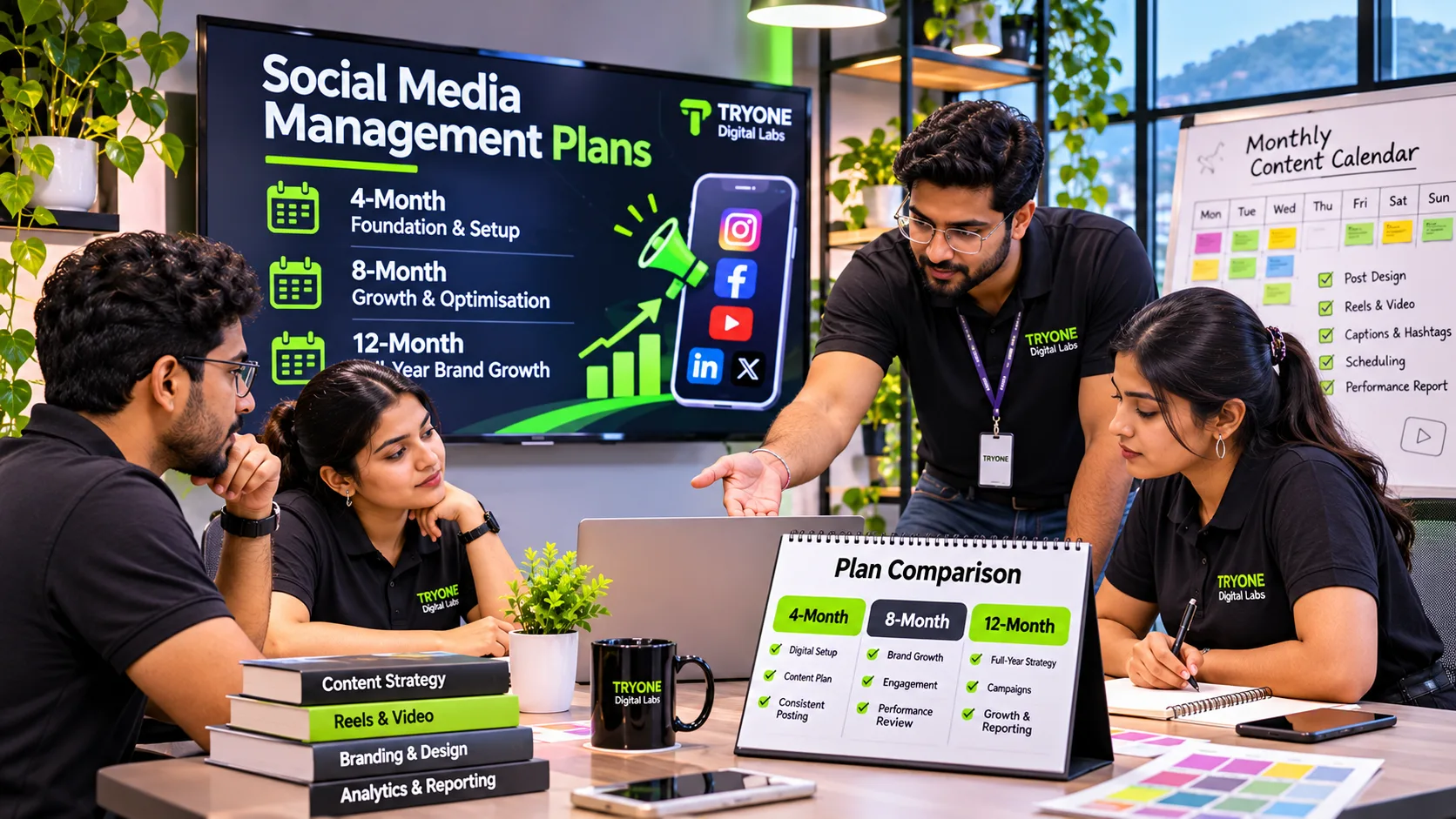
4, 8 and 12-Month Social Media Management Plans: What Businesses Should Expect
Understand what to expect from 4, 8 and 12-month social media management plans, including content creation, platform management, brand consistency, audience engagement and performance reporting.
Puja Committee Promotion Plan: Social Media and Crowd Building
Discover how Puja committees can promote Durga Puja through social media, local campaigns, sponsor partnerships, visitor information and community engagement.

Local Marketing Ideas for Hill Cart Road and Sevoke Road Shops
Discover 10 effective local marketing ideas for Hill Cart Road and Sevoke Road shops in Siliguri, including SEO, Instagram Reels, Google Ads, WhatsApp marketing and local branding.
