

4, 8 and 12-Month Social Media Management Plans: What Businesses Should Expect
Understand what to expect from 4, 8 and 12-month social media management plans, including content creation, platform management, brand consistency, audience engagement and performance reporting.
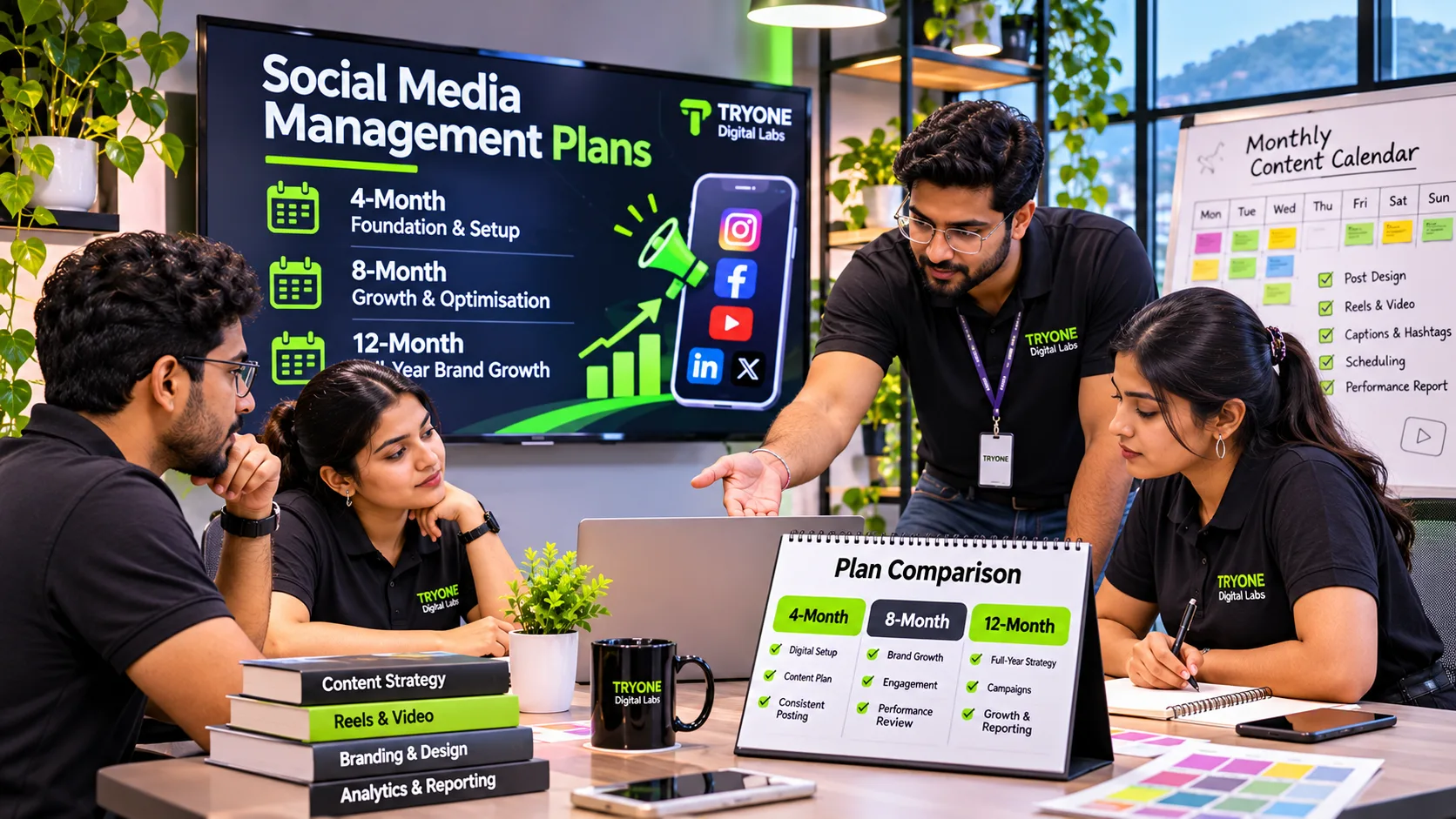
Social media has become an important communication channel for businesses. Customers use platforms such as Instagram, Facebook, YouTube and LinkedIn to discover brands, explore products, compare services and connect with businesses.
However, building a professional social media presence requires more than uploading occasional photographs or promotional posts. Businesses need a consistent content strategy, creative production, platform management and regular performance evaluation.
A structured social media management plan helps businesses organise these activities over a defined period. Whether a business chooses a 4-month, 8-month or 12-month plan, the objective should be to build a consistent digital presence and improve communication with its target audience.
For businesses in Siliguri and North Bengal, social media planning should also consider local customer behaviour, regional languages, seasonal demand and the nature of the industry.
1. Why Businesses Need a Social Media Management Plan
Managing social media without a proper plan often leads to inconsistent posting, repeated content ideas and unclear business communication.
A professional plan helps businesses establish:
A consistent brand identity.
A planned content calendar.
Regular creative production.
Platform-specific content.
Better communication with customers.
Organised enquiry handling.
Performance tracking.
Long-term content planning.
Different businesses have different requirements. A restaurant may need food photography, reels and menu updates, while a real estate company may need property presentations, walkthrough videos and lead enquiry content.
The plan should be based on the business model rather than using the same content strategy for every industry.
2. What to Expect from a 4-Month Social Media Plan
A 4-month plan can be useful for businesses that want to establish a structured social media presence or improve their existing accounts.
Month 1: Digital Foundation
The first month should focus on understanding the business and organising its digital presence.
Important activities include:
Understanding products and services.
Reviewing existing social media accounts.
Identifying the target audience.
Reviewing competitors.
Establishing brand communication guidelines.
Planning content categories.
Preparing the initial content calendar.
Month 2: Content Consistency
The second month should focus on maintaining regular communication through planned content.
Activities may include:
Designing branded social media posts.
Producing short-form videos.
Creating product or service presentations.
Publishing educational content.
Preparing festival and occasion-based creatives.
Maintaining a consistent publishing schedule.
Month 3: Audience Engagement
Once content production becomes consistent, the business can focus on improving audience interaction.
Activities may include:
Publishing customer-focused content.
Creating question-based posts.
Responding to relevant comments and messages.
Sharing customer feedback with permission.
Producing informative reels.
Reviewing content engagement.
Month 4: Performance Review
The final month should include a review of the work completed during the plan.
The business can evaluate:
Content published.
Reach and impressions.
Audience engagement.
Video views.
Profile visits.
Enquiries received, where tracked.
Content formats performing relatively better.
A 4-month plan provides an opportunity to establish consistency and understand which types of content are suitable for the business.
3. What to Expect from an 8-Month Social Media Plan
An 8-month plan gives businesses more time to develop their communication strategy, test content formats and maintain a consistent brand presence.
The work can be organised into four stages.
Months 1–2: Foundation and Brand Positioning
The initial stage focuses on brand understanding, account organisation, content planning and visual consistency.
Months 3–4: Regular Content Production
The next stage focuses on maintaining a planned publishing schedule through graphics, reels, videos, product features and informative posts.
Months 5–6: Content Improvement
Based on available performance information, the content strategy can be reviewed.
For example:
Identify popular content topics.
Review audience responses.
Test different video formats.
Improve creative presentation.
Explore relevant content series.
Adjust the publishing calendar.
Months 7–8: Performance and Planning
The final stage focuses on evaluating the overall social media activity and preparing recommendations for the next period.
An 8-month plan is suitable for businesses that want a more structured and sustained social media management process.
4. What to Expect from a 12-Month Social Media Plan
A 12-month plan allows a business to maintain its digital communication throughout the year.
It is particularly useful for businesses with changing seasonal requirements, multiple products or services, and regular customer communication needs.
A typical annual plan may include:
Quarter 1: Digital Foundation and Brand Identity
Account review and optimisation.
Brand communication guidelines.
Content categories.
Initial creative planning.
Monthly publishing calendar.
Quarter 2: Content Development and Consistency
Regular graphic design.
Reels and short-form video production.
Product and service presentations.
Educational content.
Festival and seasonal communication.
Quarter 3: Audience Engagement and Content Improvement
Review content performance.
Develop stronger content themes.
Improve video storytelling.
Create customer-focused content.
Review enquiry-related content.
Quarter 4: Annual Review and Next-Year Planning
Review annual content activity.
Evaluate platform performance.
Identify successful content formats.
Review audience engagement.
Prepare recommendations for the next year.
A 12-month plan should not mean repeating the same content every month. The strategy should evolve according to business priorities, customer needs and performance observations.
5. Which Social Media Platforms Should Your Business Use?
Every platform has a different audience and content format. Businesses should select platforms according to their target customers and communication requirements.
Useful for visual content, reels, product presentations, lifestyle brands, restaurants, fashion businesses and local services.
Useful for community communication, business updates, local audiences, events and selected advertising activities.
YouTube
Useful for longer videos, demonstrations, interviews, educational content, testimonials and Shorts.
Useful for B2B communication, professional services, company updates, recruitment and business networking.
The business does not necessarily need to be active on every platform. It is better to manage relevant platforms consistently than to create accounts without a clear purpose.
6. What Should Be Included in a Social Media Management Package?
Before selecting a social media management plan, businesses should understand exactly what is included.
A professional package may include:
Social media account management.
Monthly content calendar.
Graphic design and creative development.
Reels and short-form video production.
Captions and content writing.
Hashtag research.
Content scheduling and publishing.
Profile optimisation.
Basic community management.
Monthly performance reporting.
Additional services such as professional photography, advanced video production, influencer coordination, paid advertising, website development and customer support automation may require separate planning and pricing.
Always confirm the number of posts, reels, videos, revisions and platforms included in the agreement.
7. How Much Does Social Media Management Cost?
Social media management costs depend on the scope of work, production requirements and number of platforms.
Important pricing factors include:
Number of monthly posts.
Number of reels and videos.
Professional photography requirements.
Graphic design complexity.
Content writing requirements.
Number of platforms.
Account management responsibilities.
Reporting and analytics.
Paid advertising management.
Advertising budget.
A business should compare packages based on deliverables rather than choosing only the lowest price.
Also clarify whether advertising expenditure, GST, photography, travel and additional production expenses are included or billed separately.
8. How to Measure Social Media Performance
Social media performance should be evaluated using measurable indicators that relate to the business objective.
Important metrics include:
Reach: Number of unique accounts that viewed content.
Impressions: Total number of times content was displayed.
Engagement: Interactions such as likes, comments, shares and saves.
Video Views: Views received by video content according to the platform's measurement rules.
Profile Visits: Visits to the business profile.
Website Clicks: Clicks from social media to the business website.
Enquiries: Customer enquiries received through available communication channels.
Conversions: Completed business actions that can be tracked, such as purchases, bookings or qualified leads.
Not every business needs to focus on the same metrics. A restaurant may prioritise enquiries and reservations, while a B2B company may focus on qualified leads and business conversations.
9. Common Social Media Management Mistakes
Businesses should avoid these common mistakes:
Posting without a content strategy.
Using identical content on every platform.
Ignoring brand consistency.
Publishing promotional content all the time.
Using low-quality images and videos.
Not responding to customer enquiries.
Ignoring performance reports.
Expecting immediate results from organic content.
Selecting a package without reviewing deliverables.
Failing to plan seasonal content.
Social media management requires regular attention, creative planning and continuous improvement.
Social Media Management by Tryone Digital Labs
Tryone Digital Labs provides digital marketing and social media management support for businesses looking to develop a professional and consistent online presence.
Our services can include:
Social media strategy and planning.
Facebook and Instagram management.
YouTube content management.
Creative graphic design.
Reels and video production.
Content writing and captions.
Monthly content calendars.
Social media advertising management.
Performance tracking and reporting.
Brand communication and digital growth planning.
We work with different business categories, including retail, hospitality, healthcare, education, real estate, professional services and other industries.
Businesses in Siliguri, North Bengal, Darjeeling, Jalpaiguri and Sikkim can explore our services according to their requirements.
Visit our Social Media Growth Services page to learn more.
Frequently Asked Questions
1. Is a 4-month social media management plan enough?
A 4-month plan can help establish a content routine, improve account organisation and evaluate initial content performance. The time required for broader business objectives depends on the industry, competition and strategy.
2. What is the difference between an 8-month and a 12-month plan?
An 8-month plan provides a longer period for content development and improvement. A 12-month plan supports year-round communication, seasonal planning and annual performance evaluation.
3. Does social media management include paid advertising?
Not necessarily. Organic social media management and paid advertising can be separate services. Businesses should confirm whether advertising campaign management and the advertising budget are included in their package.
4. How many posts should a business publish every month?
There is no fixed number suitable for every business. Posting frequency should depend on the content strategy, available resources, audience expectations and platform requirements.
Conclusion
A structured social media management plan helps businesses maintain consistency, communicate their brand identity and evaluate their digital presence over time.
A 4-month plan can establish the foundation, an 8-month plan can provide more time for content development and improvement, and a 12-month plan can support year-round communication and planning.
The right plan depends on the business objectives, available budget, industry and required deliverables.
Want help with this? Talk to Tryone Digital Labs on WhatsApp +91 86378 08469 or call +91 79081 00687 for a free quote.
Comments (0)
Be the first to comment.
Keep reading
Puja Committee Promotion Plan: Social Media and Crowd Building
Discover how Puja committees can promote Durga Puja through social media, local campaigns, sponsor partnerships, visitor information and community engagement.

Local Marketing Ideas for Hill Cart Road and Sevoke Road Shops
Discover 10 effective local marketing ideas for Hill Cart Road and Sevoke Road shops in Siliguri, including SEO, Instagram Reels, Google Ads, WhatsApp marketing and local branding.

Graphic Design for Business: How Professional Visuals Build a Strong Brand Identity
Discover how professional graphic design helps businesses communicate their identity, improve brand recognition, create consistent marketing materials and build a stronger visual presence across digital and offline platforms.
