

nfluencer Collaboration vs Brand Ambassador Programs: What Should Businesses Choose?
Influencer collaborations and brand ambassador programs can help businesses build awareness, reach relevant audiences, and strengthen brand credibility. This guide explains their differences, benefits, limitations, costs, and how businesses can choose the right approach based on marketing objective
Businesses increasingly use creator partnerships to connect with audiences through social media and digital content. Influencer collaborations and brand ambassador programs are two common approaches, but they serve different marketing purposes.
An influencer collaboration is generally a campaign-based partnership in which a creator promotes a product, service, or brand through agreed content. A brand ambassador program is usually a longer-term relationship in which selected individuals consistently represent a brand and communicate its values.
Both approaches can help businesses reach potential customers, but the right choice depends on the campaign objective, audience, budget, and desired relationship.
For example, a business launching a new product may use influencer collaborations to generate initial awareness. A company seeking consistent brand representation over several months may benefit from an ambassador program.
Businesses planning creator-based marketing campaigns can explore the digital marketing services offered by Tryone Digital Labs.
What Is an Influencer Collaboration?
An influencer collaboration is a marketing partnership between a brand and a content creator who has an audience on one or more digital platforms.
The creator produces or shares content that introduces the brand, demonstrates a product, explains a service, or communicates a campaign message.
Influencer collaborations may be organized for a single campaign or a limited period.
Common Types of Influencer Collaborations
Sponsored posts: A creator publishes promotional content in exchange for payment or another agreed benefit.
Product demonstrations: The creator shows how a product works.
Reviews: A creator shares an opinion or experience with a product or service. Reviews should reflect genuine experiences and should not be controlled through pressure to provide positive feedback.
Unboxing content: The creator presents a product and its packaging.
Reels and short videos: The creator communicates a promotional message through short-form content.
Event collaborations: A creator attends or covers a brand event.
Affiliate partnerships: A creator earns a commission based on qualifying purchases or other agreed actions.
The collaboration format should match the product and audience.
What Is a Brand Ambassador Program?
A brand ambassador program is a structured relationship in which selected individuals represent a brand over an extended period.
Ambassadors may be creators, customers, professionals, community members, or other individuals who align with the brand’s identity.
The relationship generally involves repeated communication and ongoing participation rather than a single promotional post.
Common Brand Ambassador Activities
- Regular social media content
- Product education
- Participation in brand campaigns
- Event appearances
- Community engagement
- Sharing brand updates
- Providing feedback
- Representing brand values
Ambassadors can help maintain a consistent brand presence. However, businesses should allow authentic communication and avoid making every interaction appear like an advertisement.
Influencer Collaboration vs Brand Ambassador Programs
The following comparison highlights key differences.
Factor Influencer Collaboration Brand Ambassador Program
Relationship Often campaign-based Usually ongoing
Duration Short-term or limited Long-term
Main objective Awareness, reach, campaign promotion Consistent representation and relationship building
Content frequency Agreed campaign deliverables Repeated content and participation
Audience exposure Often concentrated around a campaign Can build over time
Payment structure Campaign fee, gifting, or commission Retainer, recurring payment, commission, or other agreed benefits
Brand familiarity May vary by campaign Often develops through continued involvement
Management Campaign coordination Ongoing relationship management
Best suited for Launches, promotions, events Long-term brand-building initiatives
These distinctions are general. Some influencer partnerships can be long-term, and ambassador programs may include specific campaign-based activities.
Benefits of Influencer Collaborations
1. Faster Campaign Activation
Influencer collaborations can be organized around a specific campaign objective.
A business may work with a creator to promote a product launch, seasonal offer, event, or service announcement.
This makes influencer partnerships useful when marketing activities have a defined timeline.
2. Access to Relevant Audiences
Creators often develop audiences around particular interests, industries, or content formats.
A business can select creators whose audiences are relevant to its product or service.
For example, a travel company may collaborate with travel creators, while a technology business may work with creators who produce software or technology-related content.
Audience relevance matters more than follower count alone.
3. Content Variety
Influencer collaborations can introduce different creative approaches to a campaign.
Creators may produce demonstrations, educational videos, storytelling content, reviews, or other formats that suit their audiences.
This can provide marketing content that differs from the brand’s usual promotional material.
4. Campaign-Based Budgeting
A business can define the campaign scope, deliverables, timeline, and payment terms in advance.
This can make it easier to plan a limited promotional budget.
However, the total cost should also account for content usage rights, revisions, exclusivity, and other contractual requirements.
Benefits of Brand Ambassador Programs
1. Consistent Brand Representation
A long-term ambassador relationship can help communicate the brand’s identity and values consistently.
Repeated exposure may help audiences become more familiar with the brand.
2. Long-Term Relationship Building
Ambassadors may become more familiar with the brand’s products, services, and communication style over time.
This can support more informed and relevant content.
3. Ongoing Content Opportunities
An ambassador program can provide regular content throughout the year.
This may include product updates, event coverage, educational content, and campaign participation.
4. Community Engagement
Ambassadors can help maintain communication with relevant communities.
For example, a fitness brand may work with selected fitness professionals who participate in educational activities, product discussions, and brand events.
5. Potential for Stronger Brand Familiarity
Repeated, transparent communication can help audiences understand the brand better.
However, long-term partnerships do not automatically guarantee trust or sales. The quality of the relationship and the relevance of the content remain important.
How Businesses Should Choose Between the Two
The decision should be based on marketing objectives rather than trends.
Choose Influencer Collaborations When:
- You are launching a new product
- You need campaign-specific visibility
- You want to reach a relevant audience quickly
- You are promoting a seasonal offer
- You are marketing an event
- You want to test different creator partnerships
- You have a defined campaign budget
For example, a company launching a new product category may collaborate with several relevant creators to introduce its product and collect audience responses.
Choose a Brand Ambassador Program When:
- You want ongoing brand representation
- Your marketing strategy requires repeated communication
- You want to build longer-term creator relationships
- You need regular content support
- Your brand has an active community
- You want consistent participation across multiple campaigns
For example, a travel business may work with selected creators over several months to communicate travel experiences, destinations, and brand initiatives.
Consider a Combined Strategy
Businesses do not necessarily have to choose only one approach.
An influencer collaboration can introduce a brand to new audiences, while a longer-term ambassador program can maintain communication and familiarity.
A combined strategy may be useful when the business has sufficient resources to manage both campaign-based and ongoing relationships.
How to Select the Right Influencer or Ambassador
Selecting the right partner is one of the most important parts of creator marketing.
Evaluate Audience Relevance
Review the creator’s content themes and audience characteristics. The audience should be relevant to the brand’s target customers.
Assess Engagement Quality
Look beyond follower counts. Review the nature of comments, audience interaction, and consistency of engagement.
Review Content Quality
Evaluate whether the creator communicates clearly and produces content suitable for the brand.
Check Brand Alignment
The creator’s values, communication style, and public content should be compatible with the brand’s positioning.
Consider Professional Reliability
Businesses should evaluate communication, deadlines, deliverable clarity, and the creator’s ability to follow campaign requirements.
Review Previous Partnerships
Look at the creator’s past sponsored content to understand how they communicate promotional messages.
How to Structure an Influencer or Ambassador Agreement
A clear agreement can reduce misunderstandings and support a professional relationship.
Important Agreement Elements
- Campaign objective
- Deliverables
- Content formats
- Publication schedule
- Compensation
- Revision terms
- Content usage rights
- Exclusivity requirements, if any
- Disclosure requirements
- Performance reporting
- Cancellation terms
Businesses should clearly explain whether they can reuse creator content in advertisements, websites, or other marketing materials.
Paid and gifted collaborations should be disclosed appropriately in accordance with applicable rules and platform policies.
Ambassadors should also understand how long the relationship will last and what ongoing activities are expected.
How to Measure Performance
Influencer collaborations and ambassador programs should be measured according to their objectives.
Metric What It Measures
Reach Number of people exposed to content
Impressions Total content displays
Engagement rate Audience interaction relative to a defined base
Website traffic Visitors referred from creator content
Link clicks Audience response to campaign links
Leads generated Enquiries attributed to the campaign
Conversion rate Percentage completing a desired action
Sales Purchases associated with the partnership
Cost per acquisition Cost of generating a customer
Brand sentiment Audience perception of the brand
For awareness campaigns, reach and engagement may be relevant. For sales-focused campaigns, conversions and acquisition costs may be more important.
Businesses should use appropriate tracking methods, such as campaign-specific links or promotional codes, while respecting privacy requirements.
Common Mistakes to Avoid
Choosing Creators Only by Follower Count
Large audiences do not always produce relevant engagement or business results.
Ignoring Audience Alignment
A creator’s audience should match the product category and target market.
Overcontrolling Content
Excessive restrictions can make content less authentic. Businesses should provide clear guidelines while allowing creators appropriate creative freedom.
Failing to Define Deliverables
Unclear expectations can create confusion about content quantity, timing, revisions, and usage rights.
Not Disclosing Partnerships
Transparent disclosure helps audiences understand when content is promotional.
Measuring Only Likes
Engagement is useful, but it should be connected to the campaign’s objectives.
Conclusion: Choose a Partnership That Matches Your Marketing Goals
Influencer collaborations and brand ambassador programs can both support business growth when they are planned carefully.
Influencer collaborations are generally suited to campaign-based promotion, product launches, and audience reach. Brand ambassador programs are more appropriate for ongoing brand representation, repeated communication, and longer-term relationships.
Businesses should select partners based on audience relevance, content quality, brand alignment, and measurable objectives.
A structured creator marketing strategy can help businesses develop more consistent promotional activities and build meaningful audience relationships.
For businesses looking to plan and manage digital marketing campaigns, Tryone Digital Labs can be explored for relevant marketing and technology services. https://www.tryonedigitallabsind.com/
Comments (0)
Be the first to comment.
Keep reading
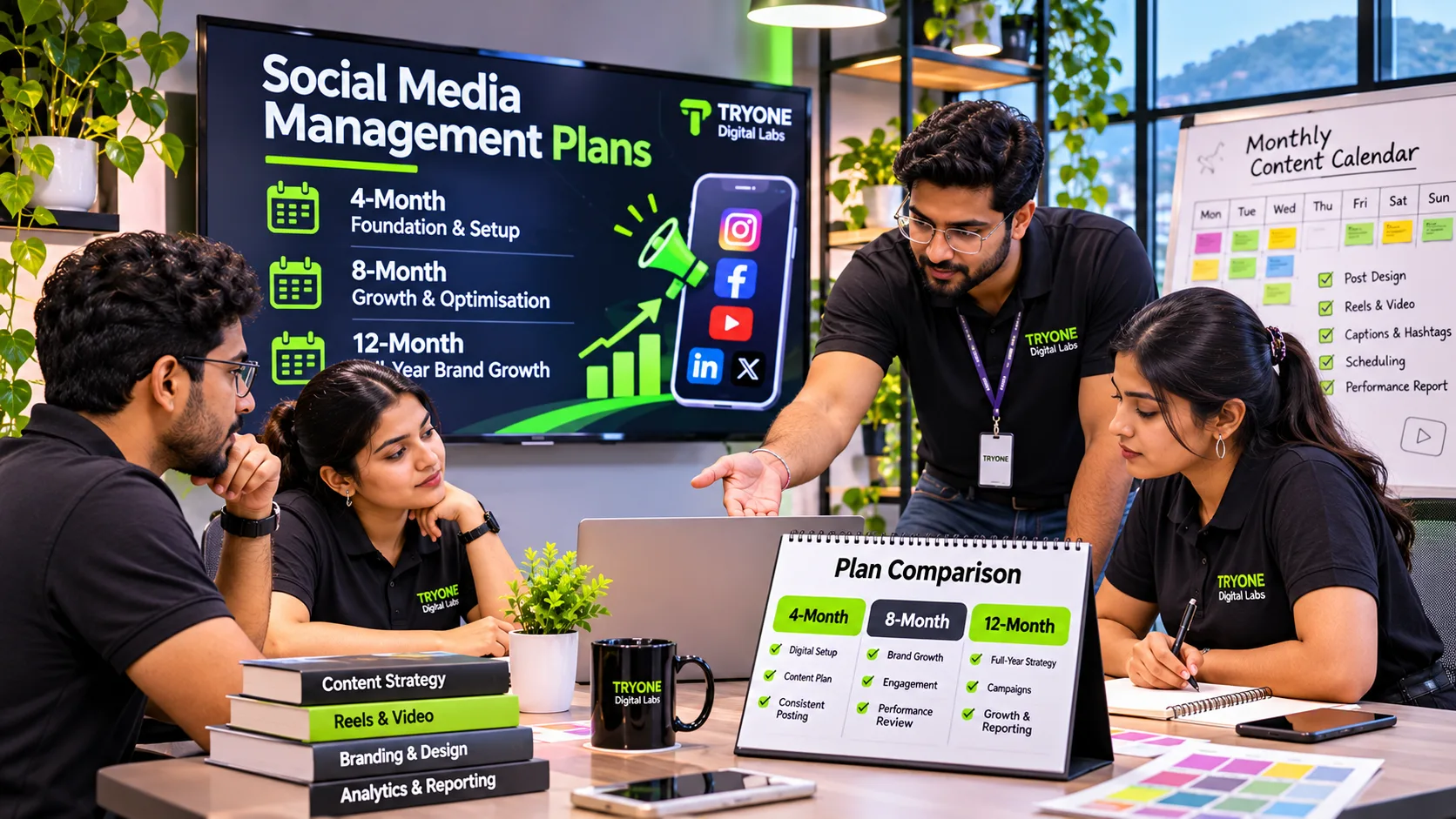
4, 8 and 12-Month Social Media Management Plans: What Businesses Should Expect
Understand what to expect from 4, 8 and 12-month social media management plans, including content creation, platform management, brand consistency, audience engagement and performance reporting.
Puja Committee Promotion Plan: Social Media and Crowd Building
Discover how Puja committees can promote Durga Puja through social media, local campaigns, sponsor partnerships, visitor information and community engagement.
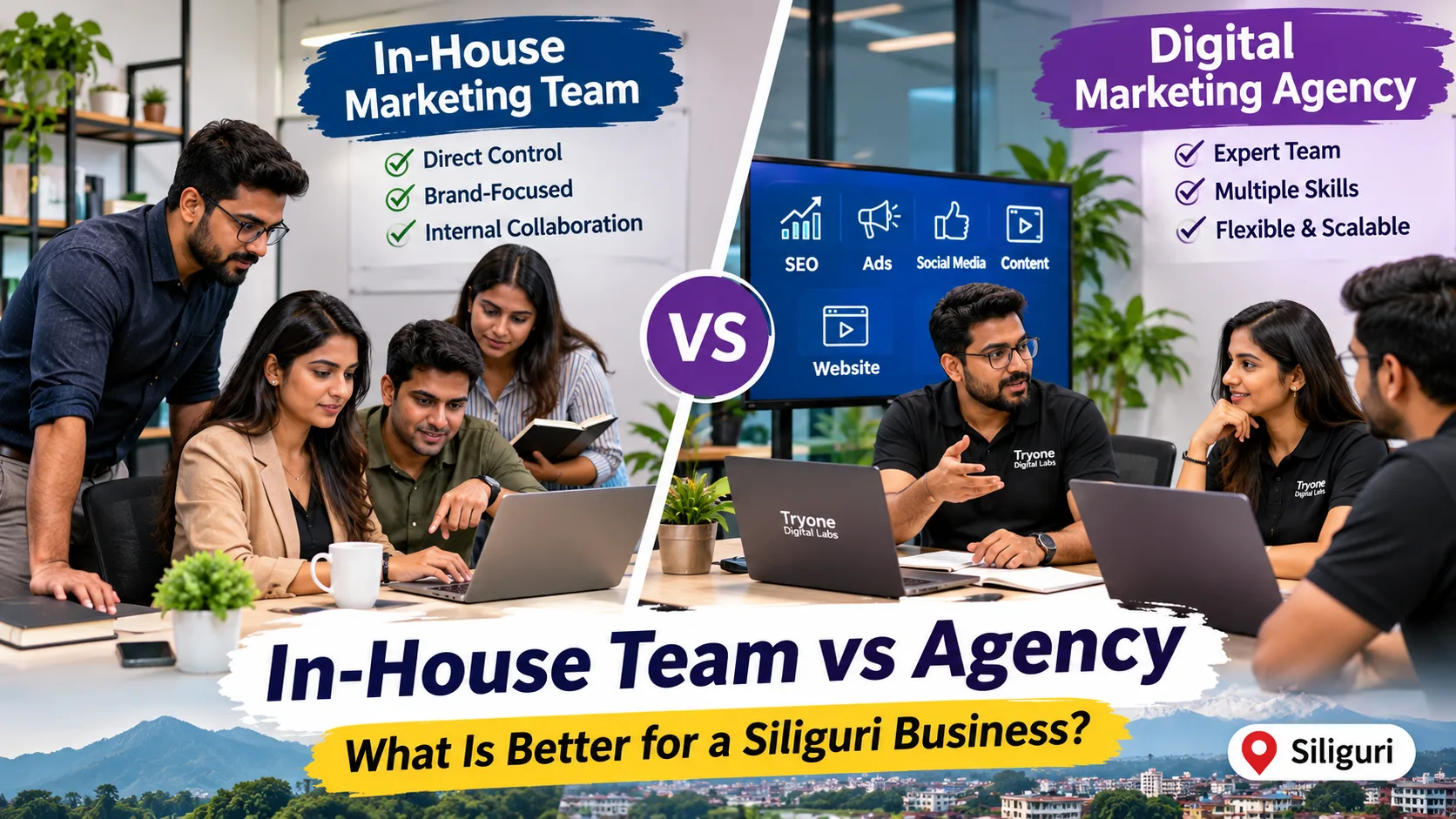
In-House Team vs Agency: What Is Better for a Siliguri Business?
Should your Siliguri business hire an in-house marketing team or work with a digital marketing agency? Compare costs, skills, flexibility and responsibilities before deciding.
