From Leads to Sales: How to Build a Better Customer Journey
Generating leads is only the beginning of business growth. Discover how to organise enquiries, qualify prospects, improve follow-ups and create a structured customer journey that supports more sales.
Generating enquiries is important, but not every enquiry becomes a customer.
A person may contact your business, ask for pricing and then disappear. Another customer may show interest but need more information before making a decision. Some prospects may be ready to purchase immediately, while others require multiple conversations.
This is why businesses need a structured customer journey.
A well-organised process helps businesses understand customer requirements, manage enquiries, communicate effectively and improve the chances of conversion.
In this guide, we explore how businesses can move from lead generation to sales through a better customer journey in 2026.
1. What Is a Customer Journey?
A customer journey describes the stages a person goes through while discovering, evaluating, purchasing and experiencing a product or service.
A typical journey may include:
Awareness.
Interest.
Consideration.
Enquiry.
Evaluation.
Purchase.
Retention.
Referral.
Not every customer follows the same path. Some may purchase quickly, while others require more time and information.
2. Understand Where Your Leads Come From
Before improving conversions, identify the sources generating enquiries.
Common lead sources include:
Website forms.
Google Ads.
Meta Ads.
Social media messages.
WhatsApp.
Phone calls.
Referrals.
Events.
Walk-in customers.
Record the source of each enquiry where possible. This helps you understand which channels attract relevant prospects.
3. Respond to Enquiries Professionally
The first interaction can influence a customer's experience.
A good enquiry-handling process should:
Acknowledge the enquiry.
Understand the customer's requirement.
Provide accurate information.
Explain the next step.
Assign responsibility for follow-up.
Response time matters, but accuracy and relevance are equally important.
4. Qualify Your Leads
Not every enquiry is a suitable sales opportunity.
Lead qualification helps identify prospects whose needs match your offering.
Consider:
Customer requirement.
Budget suitability.
Location or service availability.
Purchase timeline.
Decision-making authority where relevant.
Product or service fit.
Use relevant questions without making the enquiry process unnecessarily complicated.
5. Create a Clear Sales Pipeline
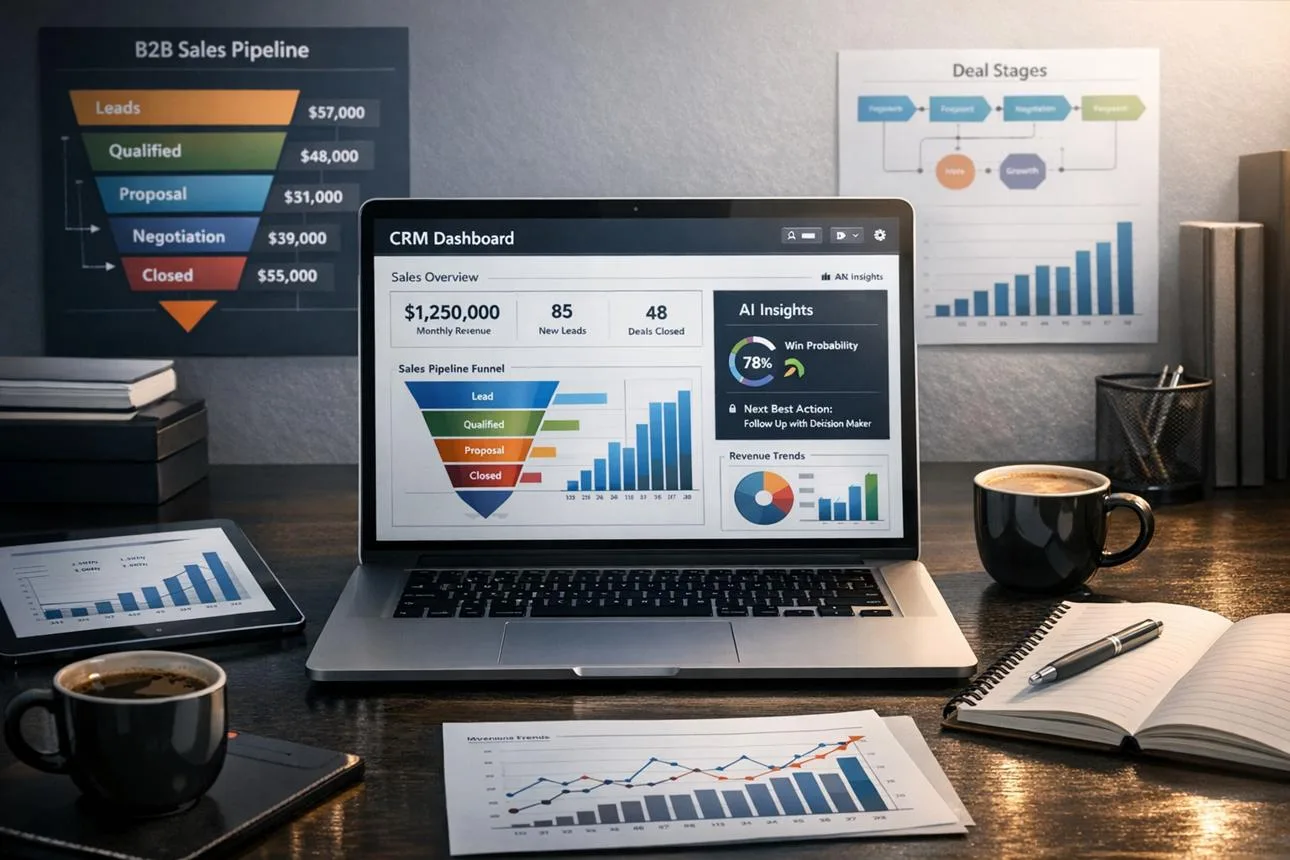
A sales pipeline helps teams understand the current status of every opportunity.
An example pipeline:
Stage | Meaning |
New Lead | Enquiry received |
Contacted | First communication completed |
Qualified | Requirement assessed |
Proposal Sent | Quotation or proposal shared |
Negotiation | Details being discussed |
Won | Customer confirmed |
Lost | Opportunity not converted |
Follow-up | Further communication required |
Adapt the stages to your actual sales process.
6. Use a CRM to Organise Customer Information
A Customer Relationship Management (CRM) system helps businesses manage leads and customer interactions.
A CRM can help organise:
Customer details.
Enquiry sources.
Conversation history.
Follow-up dates.
Quotations.
Sales stages.
Team assignments.
Conversion outcomes.
Even a simple, well-maintained system is more useful than keeping important enquiries scattered across personal phones and spreadsheets.
7. Improve Your Follow-Up Strategy
Many prospects need additional information before making a decision.
A structured follow-up process can include:
First Follow-Up
Confirm that the customer received the information or quotation.
Requirement Clarification
Ask whether the customer has any questions or needs clarification.
Value Communication
Explain relevant benefits, deliverables and next steps.
Final Follow-Up
Politely check whether the customer wishes to proceed.
Respect the customer's preferences and avoid excessive or unsolicited communication.
8. Make Your Proposals Easy to Understand
A confusing quotation can create uncertainty.
A professional proposal should clearly mention:
Customer requirements.
Scope of work.
Deliverables.
Pricing.
Payment terms.
Timeline.
Responsibilities.
Exclusions.
Validity.
Next steps.
Explain the value of the proposal instead of relying only on a price figure.
9. Build Trust Before Asking for a Sale
Customers may need reassurance before committing.
You can build confidence through:
Relevant project examples.
Accurate testimonials.
Demonstrations.
Clear explanations.
Transparent pricing.
Professional communication.
Reliable customer support.
Never promise outcomes that your business cannot reasonably guarantee.
10. Measure Your Sales Performance
A business should monitor more than the number of incoming leads.
Useful indicators include:
Total enquiries.
Qualified leads.
Contact rate.
Proposal-to-sale conversion.
Lead-to-customer conversion.
Average sales value.
Sales cycle length.
Follow-up completion.
Customer retention.
Lead source performance.
Use these metrics to identify bottlenecks in the sales process.
11. Why Leads Do Not Convert
Common reasons include:
Slow response.
Poor lead qualification.
Unclear pricing.
Weak communication.
Irrelevant proposals.
Missing follow-ups.
Lack of customer trust.
Poor service explanation.
No structured sales pipeline.
Inconsistent sales-team processes.
Review lost opportunities to understand which issues can be improved.
12. Build a Better Customer Journey with Automation
Automation can help teams manage routine sales activities.
Examples include:
Automatic enquiry acknowledgement.
Lead assignment.
Follow-up reminders.
Proposal status updates.
Meeting reminders.
Sales reporting.
Customer record updates.
Automation should support the sales team, not replace meaningful customer conversations.
13. Why Choose Tryone Digital Labs?
Tryone Digital Labs offers digital marketing, branding, technology and business growth solutions.
Our business growth-related capabilities can include:
Lead generation strategy.
Digital advertising.
Landing page planning.
Customer journey analysis.
Sales funnel strategy.
CRM workflow planning.
Enquiry management recommendations.
Conversion performance analysis.
Our focus is to help businesses connect marketing activity with a more organised customer acquisition process.
Website: https://www.tryonedigitallabsind.com/
Comments (0)
Be the first to comment.
Keep reading
Content Marketing in 2026: How Valuable Content Builds Customer Trust
Customers want useful information before making decisions. Learn how businesses can use blogs, videos, social media and educational content to build credibility and stronger customer relationships.
Performance Marketing in 2026: How to Turn Advertising into Measurable Growth
Digital advertising is more than spending money on campaigns. Discover how performance marketing helps businesses track results, understand customer behaviour and optimise advertising investments.

Website Redesign in 2026: Signs Your Business Needs a New Website
Your website creates the first digital impression of your business. Discover the warning signs of an outdated website and how a strategic redesign can improve usability, credibility and conversions.