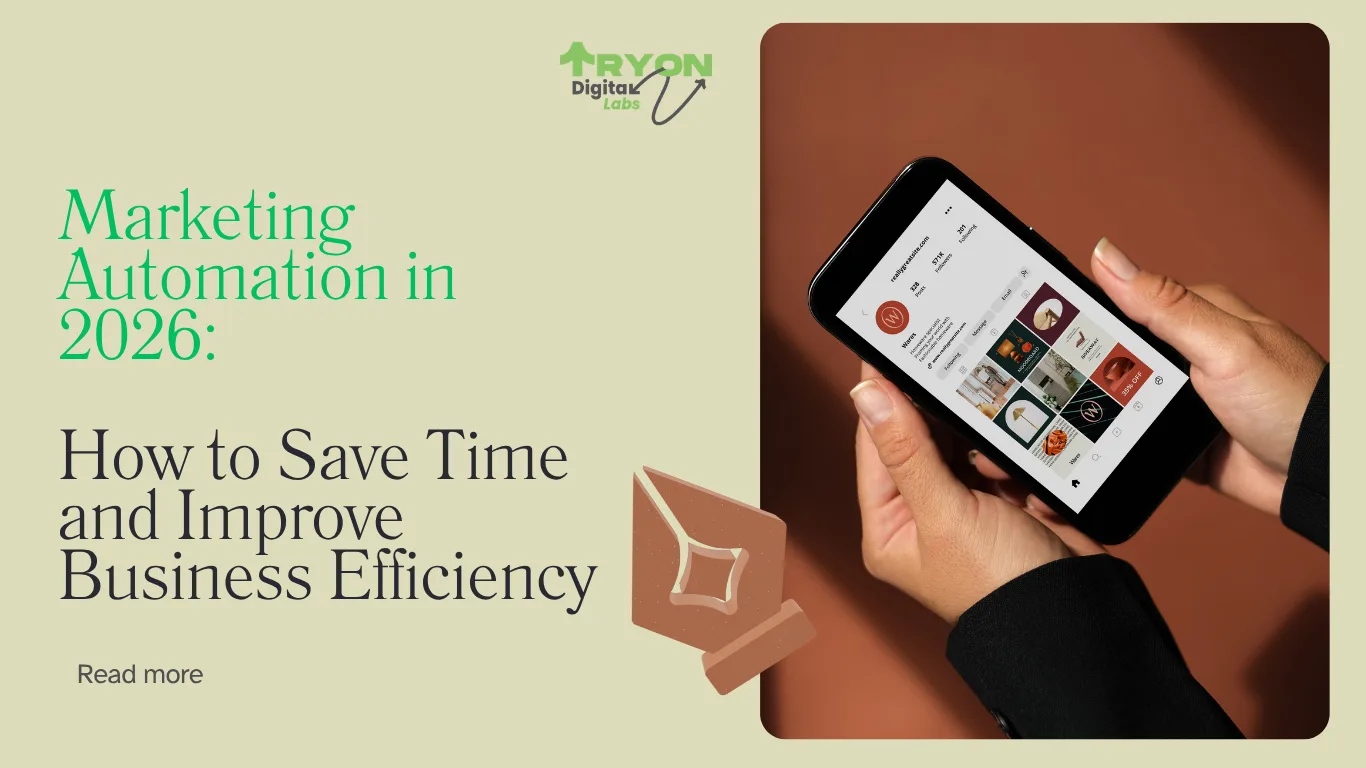
Marketing Automation in 2026: How to Save Time and Improve Business Efficiency
Repetitive marketing tasks can consume valuable time and resources. Discover how marketing automation helps businesses organise campaigns, manage leads and improve communication.
Businesses often manage multiple marketing activities simultaneously.
From responding to enquiries and sending emails to organising customer information and monitoring campaigns, repetitive tasks can consume a significant amount of time.
Marketing automation helps businesses organise these processes through software and predefined workflows.
It allows teams to focus more on planning, creativity and customer relationships instead of spending excessive time on manual activities.
1. What Is Marketing Automation?
Marketing automation refers to using software and technology to manage repetitive marketing activities through predefined rules and workflows.
Common applications include:
Automated emails.
Lead notifications.
Customer segmentation.
Follow-up reminders.
Campaign scheduling.
Customer record updates.
Performance reporting.
2. Why Businesses Need Marketing Automation
As businesses grow, manual processes may become difficult to manage.
Automation can help:
Reduce repetitive tasks.
Improve communication consistency.
Organise customer information.
Reduce missed follow-ups.
Support campaign management.
Improve team coordination.
Automation does not remove the need for human decision-making.
3. Automate Customer Enquiry Management
Businesses receive enquiries through multiple channels.
An organised workflow can help:
Capture an enquiry.
Record customer details.
Notify the responsible team member.
Assign the enquiry.
Schedule a follow-up.
Update the enquiry status.
This makes it easier to manage incoming opportunities.
4. Automate Email Campaigns
Email automation can help businesses communicate with subscribers at relevant stages.
Examples include:
Welcome messages.
Registration confirmations.
Newsletter delivery.
Event reminders.
Customer feedback requests.
Relevant follow-up emails.
Ensure that messages are appropriate to the subscriber's preferences and consent.
5. Use CRM Automation
Customer Relationship Management systems can help organise information and communication history.
CRM automation can support:
Lead assignment.
Customer record updates.
Follow-up notifications.
Sales pipeline updates.
Activity reminders.
Customer segmentation.
6. Automate Social Media Scheduling
Businesses can use scheduling tools to plan their social media calendars.
This can help with:
Post scheduling.
Content calendar management.
Campaign coordination.
Publishing reminders.
Performance monitoring.
Scheduled posts should still be reviewed, especially when responding to current events or customer conversations.
7. Connect Different Business Tools
Automation becomes more useful when relevant business systems work together.
Examples include:
Connected Tools | Possible Workflow |
Website + CRM | Capture enquiries |
CRM + Email | Send relevant follow-ups |
Forms + Notifications | Alert the sales team |
Analytics + Reports | Prepare performance summaries |
Calendar + CRM | Organise customer meetings |
8. Measure Automation Performance
Track whether automation is actually improving your processes.
Useful indicators include:
Time saved.
Follow-up completion rate.
Lead response time.
Email engagement.
Workflow error rate.
Enquiry handling time.
Campaign performance.
Customer satisfaction.
9. Common Automation Mistakes
Automating unnecessary activities.
Using poorly designed workflows.
Sending repetitive messages.
Ignoring customer preferences.
Connecting incompatible systems.
Failing to monitor automation.
Using inaccurate customer data.
Removing human support from important interactions.
10. How to Start Marketing Automation
A practical implementation process includes:
Identify repetitive tasks.
Map the existing workflow.
Select appropriate tools.
Define automation rules.
Test the workflow.
Train team members.
Monitor the results.
Improve the process regularly.
11. Why Choose Tryone Digital Labs?
Tryone Digital Labs provides digital marketing, branding and technology solutions for businesses.
Our automation-related capabilities can include:
Workflow planning.
Digital process optimisation.
CRM workflow strategy.
Marketing automation planning.
Lead management systems.
Website integration planning.
Campaign reporting.
Technology consulting.
Website: https://www.tryonedigitallabsind.com/
Frequently Asked Questions
1. What is marketing automation used for?
It is used to manage repetitive marketing activities such as email campaigns, lead notifications and customer follow-ups.
2. Is marketing automation suitable for small businesses?
Yes. Small businesses can automate selected activities to save time and improve organisation.
3. Does automation replace marketing teams?
No. It supports repetitive processes while human teams continue to manage strategy, creativity and customer relationships.
4. What is CRM automation?
CRM automation uses predefined workflows to organise customer information and manage activities such as lead assignments and reminders.
5. Is marketing automation expensive?
Costs depend on the software, features, number of users and business requirements.
6. How can businesses measure automation success?
They can measure time saved, workflow accuracy, response times and the impact on customer communication.
Conclusion
Marketing automation helps businesses manage repetitive activities and organise their digital marketing processes.
By selecting the right workflows and monitoring their effectiveness, companies can improve operational efficiency while maintaining meaningful customer communication.
Want to simplify your business marketing processes?
Connect with Tryone Digital Labs.
Website: https://www.tryonedigitallabsind.com/
Tryone Digital Labs – Your 360° Growth Partner.
#MarketingAutomation #BusinessAutomation #WorkflowManagement #DigitalMarketing #BusinessEfficiency #TryoneDigitalLabs
Comments (0)
Be the first to comment.
Keep reading

Digital Marketing for Small Businesses in Siliguri
Digital marketing provides small businesses with opportunities to reach local customers and build brand awareness. Explore practical strategies to strengthen your online presence in Siliguri.

Digital Marketing for Real Estate Businesses in 2026: How to Generate Quality Property Leads
Property buyers increasingly use digital platforms to explore real estate opportunities. Learn how real estate businesses can strengthen their online presence, showcase properties and generate relevant enquiries through digital marketing.
Online Reputation Management in 2026: How to Build Trust and Protect Your Brand Image
Customers often research a business before choosing its products or services. Discover how online reputation management, customer reviews and professional communication can strengthen brand credibility.