

Local SEO for Small Businesses: How to Get Found in Your City
Learn how local SEO helps small businesses improve online visibility, attract nearby customers and generate more enquiries through Google Search and Google Business Profile.

When people need a nearby product or service, one of their first steps is often searching online. They may look for a restaurant near them, a digital marketing agency in their city, a nearby pharmacy or a reliable service provider.
For small businesses, appearing in relevant local search results can create valuable opportunities to connect with potential customers.
This is where Local Search Engine Optimisation (Local SEO) becomes important.
Local SEO is the process of improving a business's online presence so that people searching for relevant products or services in a particular location can discover it more easily.
Whether your business operates in Siliguri, Darjeeling, Jalpaiguri, Kalimpong, Gangtok or another location, a well-planned local SEO strategy can help strengthen your digital presence.
In this guide, we explain how local SEO works and what small businesses can do to improve their local search visibility.
1. Understand What Local SEO Means
Local SEO focuses on improving the visibility of businesses for location-related searches.
For example, potential customers might search for:
Digital marketing agency in Siliguri
Best restaurant in Darjeeling
Website development company near me
Pharmacy near me
Interior designer in Gangtok
Car showroom in Jalpaiguri
Search engines use different signals to determine which businesses and pages may be relevant to a local search.
These can include the relevance of the business information, the searcher's location and the prominence of the business online.
Local SEO helps businesses provide accurate information and build a stronger presence across relevant online platforms.
2. Create and Optimise Your Google Business Profile
Google Business Profile is an important tool for businesses that want to appear in Google's local search experiences and Google Maps.
A complete and accurate profile helps customers understand what your business offers and how to contact or visit you.
Important optimisation activities include:
Use your actual business name.
Select the most relevant primary business category.
Add suitable additional categories where appropriate.
Provide accurate contact information.
Add your website address.
Maintain correct business hours.
Add a clear business description.
Upload genuine business photographs.
Keep products and services information updated where available.
Make sure all information reflects your actual business operations.
Avoid adding extra keywords to your business name when those words are not part of your real-world business name.
3. Target the Right Local Keywords
Keyword research helps identify the search terms potential customers use when looking for products and services.
For local businesses, location-based keywords can be particularly relevant.
Examples include:
Digital marketing agency in Siliguri
SEO company in North Bengal
Website development in Gangtok
Restaurant in Darjeeling
Event management company in Siliguri
Social media marketing agency near me
Create a list of keywords based on your actual services and the locations you serve.
Use these phrases naturally in relevant website pages, headings, page titles and helpful content.
Avoid repeating the same location keyword excessively. Content should remain useful and readable.
4. Create Useful Location-Based Website Pages
Your website should clearly explain where your business operates and which customers it serves.
For example, a company serving North Bengal and Sikkim may provide relevant information about its service coverage and customer requirements.
A useful location page can include:
Services available in that location
Local customer requirements
Relevant project examples
Contact and enquiry information
Frequently asked questions
Travel or service-area details where applicable
Create separate location pages only when each page provides genuinely useful and distinct information.
Simply replacing a city name in identical content across multiple pages does not create meaningful value for visitors.
5. Maintain Consistent Business Information
Your business name, address, phone number and website information should be accurate and consistent across important online listings.
This information is often referred to as NAP:
Name
Address
Phone Number
Review your website, business directories and relevant social profiles to identify outdated or incorrect details.
If your address, phone number or operating hours change, update the information wherever your business is listed.
Consistency helps customers identify the correct business and contact it without confusion.
6. Collect Genuine Customer Reviews
Customer reviews can help people evaluate a business before making a decision.
Encourage customers who have genuinely used your products or services to share honest feedback.
Good review management practices include:
Ask customers for honest reviews.
Make the review process convenient.
Respond professionally to feedback.
Thank customers for positive experiences.
Address complaints calmly and constructively.
Avoid fake reviews or misleading incentives.
Reviews should reflect real customer experiences.
A thoughtful response to negative feedback can also show prospective customers that the business takes service quality seriously.
7. Publish Helpful Local Content
Content marketing can support local SEO by answering questions relevant to your customers and service areas.
For example, a business serving Siliguri and North Bengal could publish useful articles about:
Digital marketing for local businesses
Website development for regional retailers
Event promotion strategies
Local business branding
Online advertising for restaurants
SEO basics for small businesses
Create content that answers genuine customer questions rather than publishing pages only to include location keywords.
Useful articles can help establish subject relevance and give visitors more reasons to explore your website.
8. Optimise Your Website for Mobile Users
Many customers search for nearby services using smartphones.
A website that is difficult to use on mobile devices may discourage visitors from contacting your business.
Check that your website offers:
Responsive page layouts
Readable text
Easy navigation
Clickable phone numbers
Accessible contact details
Fast-loading images
Simple enquiry forms
Convenient WhatsApp links where appropriate
Test important pages on different screen sizes.
A good mobile experience helps visitors find the information they need and take the next step.
9. Build Relevant Local Links and Partnerships
Relevant links from other websites can help people discover your business and provide useful context about your organisation.
Consider legitimate opportunities such as:
Local business associations
Community organisations
Event and sponsorship websites
Industry directories
Regional publications
Relevant business partnerships
Genuine local media coverage
Focus on relevance and credibility rather than collecting large numbers of low-quality links.
Never purchase or create manipulative links simply to influence search rankings.
10. Track Your Local SEO Performance
Local SEO should be monitored regularly so you can understand what is working and what needs improvement.
Useful performance indicators include:
Google Business Profile interactions
Website visits from organic search
Search impressions and clicks
Local search visibility
Phone calls
Direction requests
Website enquiries
Qualified leads
Customer reviews
Google Search Console can help you understand website search performance, while Google Business Profile provides information about customer interactions with your profile.
Review actual enquiries and business outcomes alongside visibility metrics.
Search rankings can vary depending on the search query, location and other factors. No agency or strategy can guarantee a specific ranking position.
11. Common Local SEO Mistakes to Avoid
Small businesses sometimes make avoidable mistakes that reduce the usefulness of their online presence.
Common issues include:
Incorrect business contact details
Incomplete Google Business Profile information
Duplicate business listings
Fake customer reviews
Keyword stuffing
Identical location pages
Poor mobile website experience
Outdated opening hours
Irrelevant directory links
Ignoring customer reviews
Review your online presence periodically and correct inaccurate information.
12. Why Local SEO Matters for Businesses in Siliguri, North Bengal and Sikkim
Businesses operating in regional markets need to connect with customers who are actively looking for relevant products and services.
Local SEO can help businesses improve their discoverability across locations such as Siliguri, Darjeeling, Jalpaiguri, Cooch Behar, Alipurduar, Kalimpong and Gangtok.
For example:
A restaurant can help nearby customers find its menu, location and opening hours.
A retailer can improve the visibility of its products and store information.
A professional service provider can publish useful service pages explaining its expertise and operating areas.
A local event company can create relevant pages for events, exhibitions and regional campaigns.
The strategy should always reflect the locations the business genuinely serves.
Frequently Asked Questions (FAQs)
1. What is Local SEO?
Local SEO is the process of improving a business's online presence for searches related to its products or services in a specific geographical area.
2. Is Google Business Profile important for local SEO?
Yes. It helps eligible businesses manage how their information appears across Google Search and Google Maps. Accurate and complete information also helps customers contact or visit the business.
3. How long does local SEO take to show results?
The timeline varies depending on competition, website quality, business information, location and the work being performed. Local SEO should be treated as an ongoing process rather than a guaranteed short-term result.
4. Can a small business do local SEO without an agency?
Yes. Businesses can start by updating their business profile, maintaining accurate contact information, collecting genuine reviews and publishing useful website content. Specialist support may be helpful for more technical or competitive requirements.
5. Does local SEO help businesses in Siliguri?
Yes. Local SEO can help businesses serving Siliguri improve their visibility for relevant location-based searches. Results depend on relevance, competition and other search factors.
6. What is the difference between SEO and Local SEO?
Traditional SEO focuses on improving visibility in relevant organic search results more broadly. Local SEO places
Explore Tryone Digital Labs
Looking for professional digital marketing, SEO, website development or business growth solutions?
Visit Tryone Digital Labs to explore our services.
Read more helpful business and marketing articles on our Blog.
Comments (0)
Be the first to comment.
Keep reading
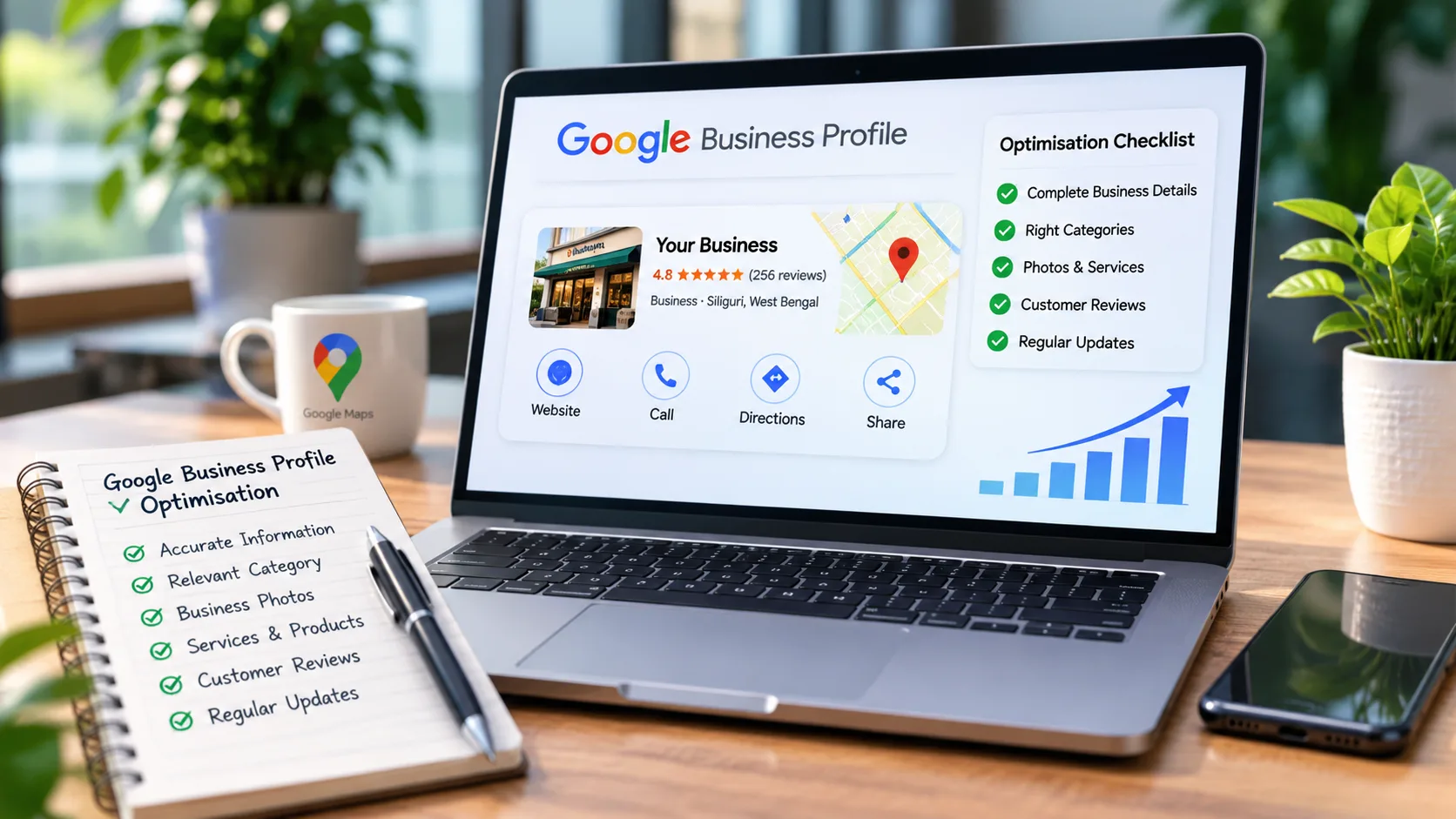
Google Business Profile Optimisation: How to Improve Your Business Visibility on Google
Learn how to optimise your Google Business Profile with accurate business details, relevant categories, photos, services and customer reviews to improve local visibility and help potential customers discover your business.

Local SEO for Small Businesses: How to Attract More Customers in Your Area
Learn how local SEO helps small businesses attract nearby customers, improve Google visibility, optimise their Google Business Profile and generate more local enquiries through targeted search strategies.

Local SEO Strategies to Grow Your Business in Siliguri
Local customers often search online before choosing a business. Discover how Google Business Profile optimisation, local keywords and website improvements can strengthen your visibility in Siliguri.
