Landing Page Optimisation in 2026: How to Convert Website Visitors into Customers
Getting visitors to your website is only the beginning. Discover how businesses can optimise landing pages to generate more enquiries, improve user experience and increase conversions.
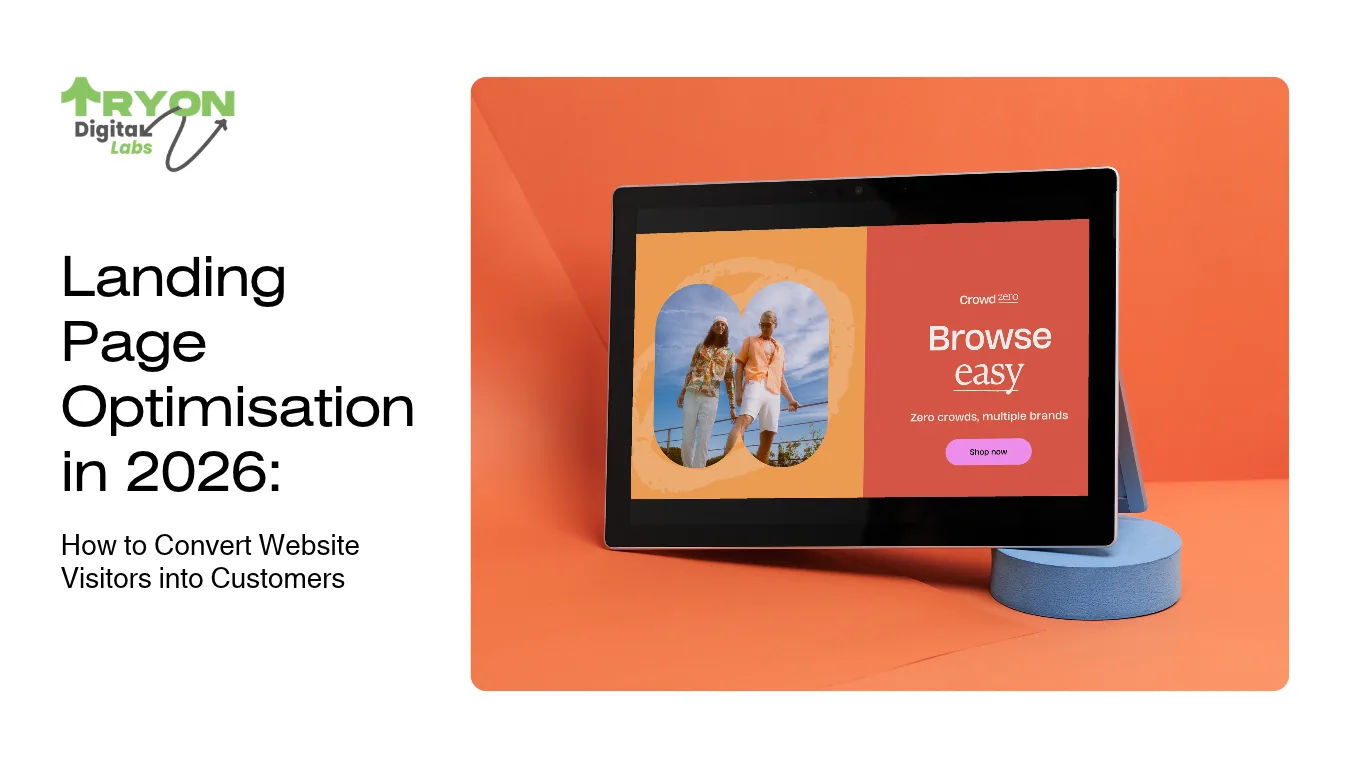
Businesses invest time and resources in attracting visitors through SEO, social media and paid advertising.
However, website traffic alone does not guarantee business growth.
Visitors need clear information, relevant content and an easy way to take the next step.
This is where landing page optimisation becomes important.
A well-designed landing page helps businesses communicate their offerings and guide visitors towards a specific action.
1. What Is a Landing Page?
A landing page is a standalone webpage designed around a particular marketing objective.
Common objectives include:
Generating enquiries.
Collecting registrations.
Promoting services.
Selling products.
Encouraging event participation.
Offering downloadable resources.
Unlike a general website homepage, a landing page usually focuses on one primary conversion goal.
2. Why Landing Page Optimisation Matters
Optimising a landing page can help businesses:
Improve visitor experience.
Communicate value clearly.
Reduce unnecessary distractions.
Increase enquiry opportunities.
Improve campaign effectiveness.
Understand customer behaviour.
3. Create a Clear and Powerful Headline
The headline is often the first major piece of information visitors notice.
A good headline should:
Explain the main offering.
Address the visitor's requirement.
Communicate a clear benefit.
Match the advertisement or link that brought the visitor.
Avoid exaggerated promises.
4. Write Compelling Landing Page Content
Your landing page should answer important customer questions.
Include:
What your business offers.
Who the service is intended for.
What problem it addresses.
Why customers should consider it.
What action they should take next.
Use simple language and avoid unnecessary technical terms.
5. Use Strong Call-to-Action Buttons
A Call to Action (CTA) tells visitors what to do next.
Examples include:
Get a Free Consultation.
Contact Our Team.
Request a Quote.
Explore Our Services.
Book an Appointment.
Get Started Today.
Use clear labels and make buttons easy to identify.
6. Keep Landing Page Forms Simple
Long forms can create unnecessary friction.
Ask only for information required to handle the enquiry.
For example:
Name.
Email address.
Phone number, if needed.
Service requirement.
Explain how submitted information will be used.
7. Add Trust-Building Elements
Visitors may hesitate to submit enquiries if they are unfamiliar with a business.
Relevant trust elements include:
Genuine testimonials.
Verified reviews.
Case studies.
Portfolio examples.
Business information.
Clear contact details.
Transparent service descriptions.
Use authentic information rather than fabricated claims.
8. Optimise for Mobile Devices
Landing pages should work smoothly on smartphones.
Check:
Responsive layouts.
Readable text.
Properly sized buttons.
Short forms.
Optimised images.
Easy navigation.
Fast loading.
9. Conduct A/B Testing
A/B testing compares two versions of a page to understand which performs better.
You can test:
Headlines.
CTA wording.
Button placement.
Page layouts.
Images.
Form length.
Content structure.
Change one important element at a time where practical and measure results using sufficient data.
10. Measure Landing Page Performance
Important indicators include:
Metric | Purpose |
Conversion Rate | Measures completed actions |
Bounce Rate | Helps assess engagement patterns |
Form Submissions | Measures enquiry activity |
CTA Clicks | Tracks button interactions |
Page Speed | Measures loading performance |
Traffic Sources | Identifies visitor acquisition channels |
Interpret metrics according to the page's objective and analytics setup.
11. Common Landing Page Mistakes
Unclear headlines.
Too many CTAs.
Complicated forms.
Slow loading pages.
Poor mobile design.
Missing trust elements.
Irrelevant content.
Misleading advertisements.
No conversion tracking.
Not testing different versions.
12. Why Choose Tryone Digital Labs?
Tryone Digital Labs provides website development, digital marketing and creative solutions.
Our related capabilities can include:
Landing page design.
Website development.
UI/UX planning.
Conversion-focused content.
Lead generation strategy.
Website optimisation.
Digital advertising.
Performance analysis.
Website: https://www.tryonedigitallabsind.com/
Frequently Asked Questions
1. What is landing page optimisation?
It is the process of improving a webpage to make it more effective at achieving a specific marketing objective.
2. What is a good landing page conversion rate?
There is no universal ideal conversion rate. It depends on the industry, audience, offer and traffic source.
3. How many CTAs should a landing page have?
A landing page should generally have one primary conversion objective, with supporting CTA placements where appropriate.
4. Does landing page design affect conversions?
Yes. Layout, readability, navigation and content clarity can influence how visitors interact with a page.
5. What is A/B testing?
It is a method of comparing two versions of a webpage or element to evaluate their performance.
6. Is mobile optimisation necessary for landing pages?
Yes. Mobile-friendly design helps visitors interact with landing pages across different devices.
Conclusion
A landing page should do more than look attractive. It should communicate value, answer customer questions and make the next step easy.
By improving content, design, loading speed and calls to action, businesses can create more effective digital experiences.
Want to turn your website visitors into genuine business enquiries?
Connect with Tryone Digital Labs.
Website: https://www.tryonedigitallabsind.com/
Tryone Digital Labs – Your 360° Growth Partner.
#LandingPageOptimisation #ConversionRateOptimisation #LeadGeneration #WebsiteDesign #DigitalMarketing #TryoneDigitalLabs
Comments (0)
Be the first to comment.
Keep reading

Digital Marketing for Small Businesses in Siliguri
Digital marketing provides small businesses with opportunities to reach local customers and build brand awareness. Explore practical strategies to strengthen your online presence in Siliguri.

Digital Marketing for Real Estate Businesses in 2026: How to Generate Quality Property Leads
Property buyers increasingly use digital platforms to explore real estate opportunities. Learn how real estate businesses can strengthen their online presence, showcase properties and generate relevant enquiries through digital marketing.
Online Reputation Management in 2026: How to Build Trust and Protect Your Brand Image
Customers often research a business before choosing its products or services. Discover how online reputation management, customer reviews and professional communication can strengthen brand credibility.