

How to Generate Quality Leads Through Digital Advertising
Learn how digital advertising helps businesses attract qualified leads and convert prospects into customers.
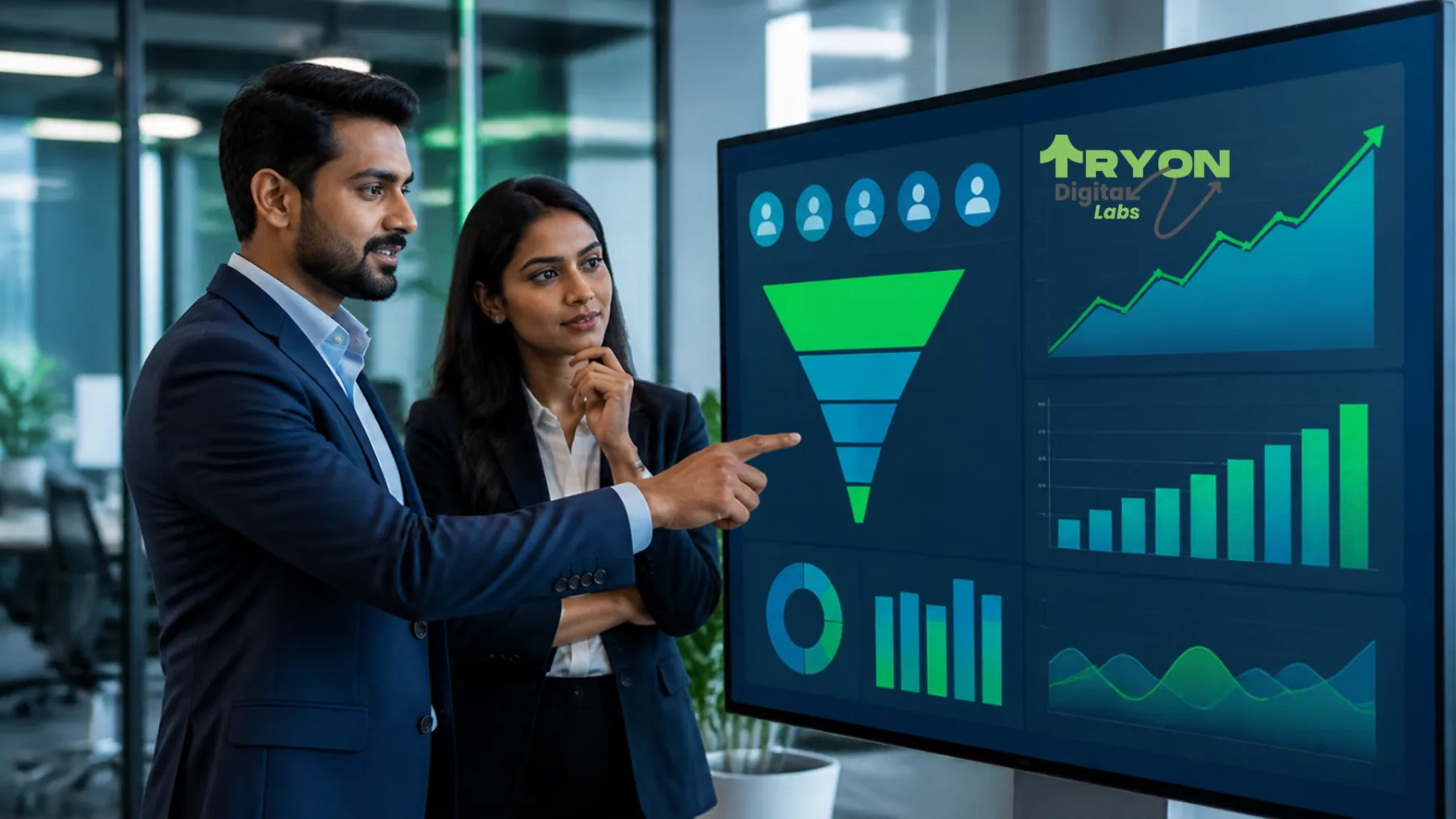
Generating customers is one of the biggest challenges for businesses operating in competitive markets. Whether a company offers professional services, sells products, manages a retail store or operates an educational institution, attracting potential customers is essential for business growth.
Traditional advertising methods can help businesses build awareness, but measuring how many enquiries or customers come directly from an advertisement can sometimes be difficult.
Digital advertising provides a more measurable approach.
Businesses can reach specific audiences, promote relevant products or services, collect enquiries and analyse campaign performance through platforms such as Google Ads, Facebook and Instagram.
However, generating a large number of leads does not necessarily mean generating quality leads.
The real objective is to attract people who have a genuine interest in a product or service and are more likely to become paying customers.
In this guide, we explain how businesses can generate quality leads through digital advertising and build a more effective customer acquisition strategy.
1. What Is Digital Lead Generation?
Digital lead generation is the process of attracting potential customers through online platforms and collecting their contact information or enquiries.
A lead may be someone who:
Fills out a website enquiry form.
Sends a WhatsApp message.
Requests a product quotation.
Calls a business after viewing an advertisement.
Registers for a consultation.
Downloads a brochure.
Requests a product demonstration.
For example, a real estate company can advertise an upcoming residential project and collect enquiries from interested property buyers.
Similarly, a digital marketing agency can run advertising campaigns to attract businesses looking for professional marketing services.
The purpose is to create a structured process that moves potential customers from initial interest towards a business enquiry and, eventually, a purchase.
2. Why Businesses Need Digital Advertising for Lead Generation
Digital advertising helps businesses reach potential customers beyond their existing audience.
Some important advantages include:
Targeted Audience Reach
Businesses can reach audiences based on available demographic, geographic, interest and behavioural targeting options.
For example, a furniture showroom in Siliguri can focus its campaigns on relevant customers in Siliguri and nearby locations rather than spending its advertising budget on unrelated markets.
Measurable Campaign Performance
Businesses can monitor important advertising metrics, including:
Impressions.
Clicks.
Click-through rate (CTR).
Cost per click (CPC).
Cost per lead (CPL).
Conversion rate.
Qualified lead rate.
Customer acquisition cost (CAC).
These metrics help businesses evaluate their advertising investment.
Flexible Advertising Budgets
Businesses can start with a controlled advertising budget, evaluate results and adjust spending according to campaign performance.
Faster Customer Acquisition Opportunities
Paid advertising allows businesses to reach potential customers without depending exclusively on organic search rankings or existing social media followers.
However, campaign results depend on audience demand, competition, advertising quality, budgets and conversion processes.
3. Best Digital Advertising Platforms for Lead Generation
Selecting the right platform is important because different platforms attract customers at different stages of their buying journey.
Google Ads for High-Intent Customers
Google Ads allows businesses to reach users searching for specific products and services.
For example, someone searching for:
Digital marketing agency in Siliguri.
Website development company in India.
Event management services.
Real estate properties in Siliguri.
May already be looking for a relevant service.
Google Search campaigns can help businesses reach these users when their search intent matches the advertised offering.
Best suited for:
Professional services.
Healthcare and educational services.
Real estate.
B2B services.
Local businesses.
High-intent product and service searches.
Facebook and Instagram Ads for Audience Acquisition
Meta advertising helps businesses reach relevant audiences through images, videos, reels, carousel advertisements and lead forms.
Businesses can use these formats to introduce products, demonstrate services and encourage potential customers to make enquiries.
Best suited for:
Retail stores.
Fashion and lifestyle brands.
Restaurants and hospitality businesses.
Educational institutions.
Real estate promotions.
Events and product launches.
YouTube Ads for Video-Based Marketing
YouTube advertising allows businesses to communicate through video content.
It can be useful for product demonstrations, brand introductions, service explanations and campaign awareness.
Best suited for:
Product demonstrations.
Corporate branding.
Educational services.
Hospitality businesses.
Large-scale brand campaigns.
WhatsApp for Lead Communication
WhatsApp can support the enquiry and follow-up process after a customer responds to an advertisement.
Businesses can use WhatsApp to:
Answer product and service questions.
Share brochures and quotations.
Schedule appointments.
Provide customer support.
Follow up with interested prospects.
Businesses using the WhatsApp Business Platform should follow applicable messaging consent and platform policies.
4. Seven Steps to Generate Quality Leads Through Digital Advertising
Step 1: Define Your Ideal Customer
Before launching an advertisement, understand who your potential customer is.
Consider:
Age group and relevant demographics.
Geographic location.
Customer requirements.
Purchasing ability.
Problems they want to solve.
Products or services they are interested in.
For example, an advertising campaign for a premium furniture showroom should not necessarily target the same audience as a low-cost furniture retailer.
Clear audience research helps businesses create more relevant advertisements.
Step 2: Choose the Right Advertising Objective
Every advertising campaign should have a clear objective.
Some common objectives include:
Website enquiries.
WhatsApp conversations.
Phone calls.
Instant lead forms.
Product purchases.
Appointment bookings.
Avoid running campaigns simply to increase likes, impressions or followers when the actual business objective is customer acquisition.
Step 3: Create Problem-Solving Advertisements
A strong advertisement should communicate why someone should consider your product or service.
Instead of using only promotional messages, highlight customer problems and relevant solutions.
For example:
Generic advertisement:
"We provide digital marketing services. Contact us today."
Problem-focused advertisement:
"Struggling to generate consistent business enquiries? Build a measurable digital advertising strategy that connects your business with relevant customers."
The second message communicates a specific customer challenge and a relevant solution.
All advertising claims should be accurate and supported by the actual service offering.
Step 4: Build a Conversion-Focused Landing Page
Sending advertising traffic to an irrelevant or confusing website page can reduce conversion opportunities.
A dedicated landing page should contain:
Clear service information.
Strong headline.
Business introduction.
Key service benefits.
Relevant examples or portfolio.
Customer enquiry form.
WhatsApp contact option.
Clear call to action.
The landing page should also load properly on mobile devices.
Step 5: Implement Conversion Tracking
Conversion tracking helps businesses understand which advertising campaigns are generating meaningful actions.
Depending on the campaign setup, businesses can track:
Form submissions.
WhatsApp button clicks.
Phone calls.
Purchase completions.
Appointment requests.
Qualified enquiries.
Google Analytics 4, Google Ads conversion tracking and Meta Pixel with appropriate Conversions API implementation can help measure website activity.
Tracking should be configured correctly, with appropriate privacy notices, consent and applicable data protection requirements.
Step 6: Qualify Every Incoming Lead
Not every enquiry represents a potential customer.
Businesses should evaluate leads based on relevant factors.
For example:
| Qualification factor | What to evaluate |
|---|---|
| Customer requirement | Is the enquiry relevant? |
| Budget | Can the customer afford the offering? |
| Location | Is the customer within the service area? |
| Buying timeline | Is the customer ready to purchase? |
| Decision authority | Is the person involved in the purchase decision? |
A business should prioritise relevant and genuinely interested prospects instead of focusing exclusively on the total number of enquiries.
Step 7: Follow Up Consistently
Lead generation does not end when someone submits a form.
Businesses need an organised follow-up process.
A good lead management process includes:
Receive the customer enquiry.
Record the lead details.
Assign the lead to the appropriate team member.
Contact the prospect.
Understand the customer's requirements.
Share relevant information or quotations.
Schedule the next follow-up.
Update the final lead status.
A CRM system can help businesses manage this process more efficiently.
5. How to Improve Lead Quality and Reduce Wasted Advertising Spend
Businesses sometimes receive numerous enquiries but struggle to convert them into customers.
This can happen because advertisements attract the wrong audience, landing pages communicate unclear offers or sales teams fail to follow up effectively.
Here are some ways to improve lead quality.
Use Relevant Targeting
Select locations and audiences based on the actual service area and customer profile.
Avoid expanding targeting simply to increase impressions.
Use Specific Advertising Messages
Make the advertised product, service, location and customer requirements clear.
This can help discourage irrelevant enquiries.
Add Qualifying Questions
Where appropriate, ask potential customers about their requirements, budget range, location or preferred service.
Do not make enquiry forms unnecessarily complicated.
Analyse Campaign-Level Performance
Compare different campaigns, advertisements, audience segments and conversion sources.
Identify which combinations produce qualified enquiries rather than simply the cheapest leads.
Improve Landing Page Relevance
Ensure that the landing page directly matches the advertisement.
A customer clicking an advertisement for website development should reach a relevant website development page rather than an unrelated homepage.
6. Important Metrics Every Business Should Track
Measuring the correct metrics helps businesses understand whether their campaigns are generating commercial value.
| Metric | Meaning |
|---|---|
| CTR | Percentage of impressions resulting in clicks |
| CPC | Average cost per click |
| CPL | Advertising spend divided by leads generated |
| Lead Quality Rate | Percentage of leads meeting qualification criteria |
| Conversion Rate | Percentage of relevant visitors completing a desired action |
| CAC | Total customer acquisition cost |
| ROAS | Revenue attributed to advertising divided by advertising spend |
Example: Understanding Cost Per Lead
Suppose a business spends ₹20,000 on digital advertisements and receives 100 enquiries.
The calculation is:
Cost Per Lead = Total Advertising Spend ÷ Total Leads
₹20,000 ÷ 100 = ₹200 per lead.
However, suppose only 25 enquiries are qualified.
The cost per qualified lead becomes:
₹20,000 ÷ 25 = ₹800.
This example demonstrates why businesses should evaluate lead quality alongside lead volume.
A campaign generating inexpensive but irrelevant enquiries may be less valuable than a campaign generating fewer, highly relevant prospects.
7. Digital Lead Generation for Different Industries
Different industries require different advertising approaches.
Real Estate
Real estate companies can use property-focused advertisements, project landing pages, enquiry forms and appointment booking systems to attract potential buyers.
Healthcare
Clinics, hospitals and diagnostic centres can use relevant search campaigns and local advertising to help prospective patients discover their services.
Healthcare advertising must follow applicable platform restrictions and professional advertising requirements.
Education
Schools, colleges and training institutions can promote admission enquiries, course information sessions and counselling appointments.
Retail and E-commerce
Retail brands can use product catalogues, promotional campaigns, remarketing and conversion-focused advertising to attract potential customers.
Hospitality
Hotels, restaurants and travel businesses can promote experiences, packages and reservation enquiries through relevant campaigns.
B2B Companies
B2B organisations can use search advertising, targeted content, landing pages and structured lead qualification to attract business prospects.
8. Local Lead Generation in Siliguri, North Bengal and Sikkim
Local businesses need advertising strategies that match their service areas.
For example, a company operating in Siliguri may want to reach customers in:
Siliguri.
Darjeeling.
Jalpaiguri.
Kalimpong.
Cooch Behar.
Alipurduar.
Kurseong.
Gangtok.
Other relevant locations across North Bengal and Sikkim.
A location-specific campaign can use relevant keywords, locally meaningful advertisements and dedicated landing pages.
Businesses should also ensure that their contact details, service locations and customer enquiry processes are accurate.
The objective is not simply to reach more people but to reach potential customers who can realistically purchase the advertised service.
9. Common Digital Lead Generation Mistakes
Avoid these mistakes when planning advertising campaigns:
Running advertisements without clear business objectives.
Choosing audiences without customer research.
Using generic advertisements for every customer segment.
Sending traffic to irrelevant website pages.
Ignoring conversion tracking.
Focusing only on low cost per lead.
Failing to qualify enquiries.
Responding too slowly to potential customers.
Not maintaining a structured CRM process.
Increasing advertising budgets without evaluating actual performance.
Avoiding these problems can improve campaign accountability and lead management.
10. How Tryone Digital Labs Helps Businesses Generate Leads
Tryone Digital Labs is a 360° Growth Company providing digital marketing, branding, advertising, technology and business growth solutions.
Our performance marketing approach focuses on building an integrated system that connects advertising campaigns with business enquiries and customer acquisition.
Our services include:
Performance marketing strategy.
Google Ads campaign management.
Facebook and Instagram advertising.
Creative advertising development.
Audience research and targeting.
Landing page development.
Lead generation campaigns.
WhatsApp enquiry integration.
Conversion tracking.
Campaign performance analysis.
Marketing automation solutions.
We work with businesses looking to strengthen their digital presence and develop more structured customer acquisition processes.
Whether you operate a retail business, educational institution, real estate company, healthcare organisation, hospitality brand or professional service company, your advertising strategy should be aligned with your business goals.
Frequently Asked Questions
1. What is the best way to generate quality leads online?
The best approach combines audience research, relevant advertising, conversion-focused landing pages, accurate tracking and a structured lead qualification process.
2. Which platform is best for lead generation?
Google Ads can help reach customers actively searching for products and services. Meta Ads can help businesses reach relevant audiences through visual advertisements and lead generation campaigns. The best choice depends on customer behaviour and campaign objectives.
3. How much does digital lead generation cost in India?
There is no fixed cost. Lead generation costs depend on industry competition, target audience, advertising platform, location, campaign quality and conversion rate.
4. What is the difference between a lead and a qualified lead?
A lead is someone who expresses interest in a business offering. A qualified lead meets relevant criteria such as genuine requirements, suitable budget, service location and purchasing intent.
5. Can small businesses generate leads through Facebook and Instagram?
Yes. Small businesses can use Meta advertising to reach relevant audiences, showcase products and services and collect enquiries through suitable campaign formats.
6. Why are my advertisements generating enquiries but not sales?
Possible reasons include poor lead qualification, pricing mismatches, unclear offers, delayed follow-ups, weak sales processes or attracting audiences with low purchasing intent.
7. Do businesses need a website for lead generation?
A website is not compulsory for every campaign format, but a relevant landing page can provide detailed information, build credibility and support conversion tracking.
8. How can CRM software improve lead generation?
CRM software helps businesses record enquiries, assign leads, track conversations, schedule follow-ups and monitor the sales pipeline.
Conclusion
Generating quality leads through digital advertising requires more than launching advertisements on Google, Facebook or Instagram.
Businesses need to understand their customers, select the right advertising channels, communicate relevant solutions, create effective landing pages and maintain a structured follow-up process.
By combining performance marketing with lead qualification, conversion tracking and CRM-based management, businesses can develop a more measurable customer acquisition strategy.
Want to generate more relevant business enquiries?
Connect with Tryone Digital Labs and discuss a performance marketing strategy aligned with your business goals.
Website: https://www.tryonedigitallabsind.com/
Explore our services: https://www.tryonedigitallabsind.com/
Team Tryone Digital Labs
Comments (0)
Be the first to comment.
Keep reading
B2B Lead Generation for Manufacturers in Siliguri
How Siliguri manufacturers can find dealers and business buyers with a clear catalogue, Google visibility, LinkedIn and WhatsApp follow-up, and a simple lead tracking routine.

How to Generate Quality Leads Through Digital Marketing
Discover how to generate quality business leads through SEO, paid advertising, landing pages, social media and strategic follow-ups that turn potential customers into real opportunities.

Google Ads vs Meta Ads: Which Platform Should Your Business Choose?
Compare Google Ads and Meta Ads to understand their differences, benefits, advertising costs and targeting options, and choose the right platform for your business.
