

Corporate Event Planning Checklist for North Bengal Companies
Planning a corporate event in North Bengal? Use this checklist to organise venues, budgets, speakers, branding, registrations, production and event-day operations.
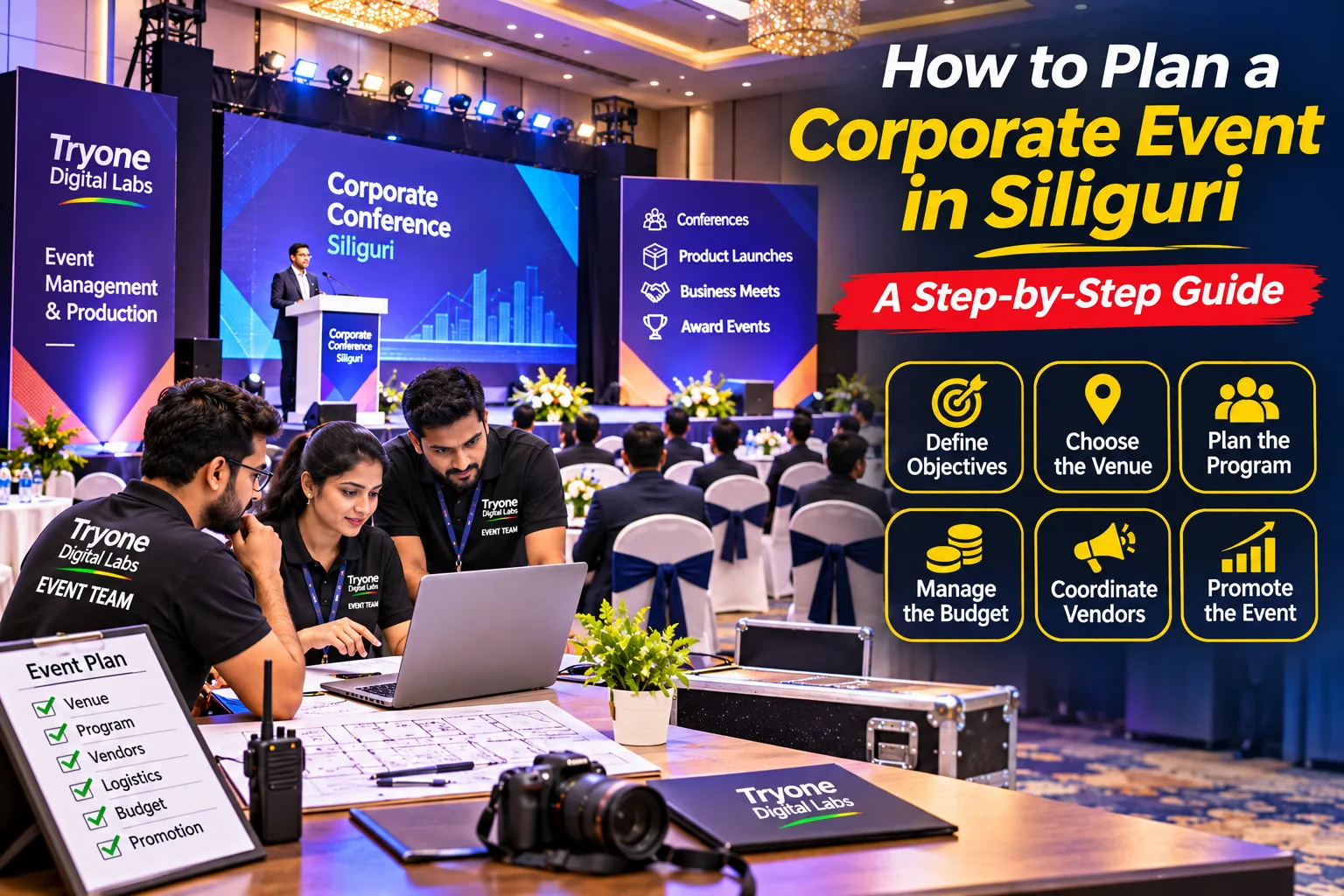
Corporate events give businesses an opportunity to connect with employees, customers, partners, suppliers and industry professionals. Whether it is an annual company celebration, business conference, product launch, dealer meet or award ceremony, a well-organised event can create a professional experience and communicate the company's identity.
However, successful corporate event planning requires more than booking a venue and arranging refreshments. The organiser must coordinate budgets, schedules, speakers, registrations, branding, technical production, vendors and guest management.
For companies in North Bengal, event planning should also consider local venue availability, travel arrangements, vendor coordination and the needs of guests coming from different towns.
This corporate event planning checklist will help businesses prepare their next event in a structured way.
1. Define the Purpose and Objectives of the Event
Start by deciding why the company is organising the event. The objective will influence the event format, audience, venue, budget and programme.
Common corporate event formats include:
Annual company meetings and celebrations.
Business conferences and seminars.
Product and service launches.
Dealer and distributor meetings.
Employee engagement programmes.
Award ceremonies and recognition events.
Corporate training workshops.
Networking events and business gatherings.
Press conferences and media events.
Customer appreciation programmes.
Write down the main objective and the outcome the company expects. For example, a product launch may focus on introducing a new offering, while an employee event may focus on recognition and team participation.
Also identify the target audience, expected number of attendees, preferred event date and overall experience.
2. Prepare a Realistic Event Budget
A detailed budget helps businesses understand the financial requirements before confirming vendors and making commitments.
Prepare an itemised budget covering:
Venue rental and booking charges.
Stage design and fabrication.
Sound, lighting and LED screens.
Event branding and printing.
Food, beverages and hospitality.
Speaker or artist fees, where applicable.
Photography and videography.
Guest registration and invitation management.
Travel and accommodation.
Event staff and coordination.
Transportation and logistics.
Permissions, insurance and applicable compliance costs.
Digital promotion and advertising.
Gifts, certificates and event materials.
Taxes and other applicable charges.
Ask vendors for written quotations and compare the scope of work, delivery timelines and payment terms.
Keep a contingency amount for unexpected expenses. The amount should depend on the event's scale and complexity.
Do not finalise the budget based only on the venue and decoration costs. Technical production, guest hospitality and event-day operations can also form important parts of the total expense.
3. Select the Right Venue in North Bengal
The venue should match the event's purpose, audience size and production requirements.
Companies organising events in Siliguri and other parts of North Bengal may consider hotels, banquet halls, conference facilities, auditoriums and suitable outdoor venues.
Before confirming a venue, check:
Seating capacity and layout options.
Stage and presentation area.
Parking and transport access.
Electricity supply and backup.
Sound and acoustic conditions.
Internet connectivity.
Air conditioning and ventilation.
Washrooms and accessibility.
Catering arrangements.
Emergency exits and safety provisions.
Setup and dismantling timings.
Venue rental and cancellation conditions.
If guests are travelling from Darjeeling, Jalpaiguri, Cooch Behar, Kalimpong or Sikkim, consider their travel time and accommodation requirements.
Visit the venue before booking whenever possible. Confirm all important arrangements in writing.
4. Create the Event Schedule and Programme
A corporate event should follow a clear programme so that guests, speakers, vendors and the organising team understand the sequence of activities.
A typical event schedule may include:
Venue opening and registration.
Guest welcome and seating.
Opening announcement.
Welcome address.
Keynote or leadership speech.
Main presentation or programme.
Product demonstration, if applicable.
Networking or refreshments.
Awards and recognition.
Closing remarks and group photographs.
Allocate realistic time for every activity. Include short breaks and allow flexibility for speaker delays or technical adjustments.
Share the final schedule with the event team, venue, speakers and other relevant participants before the event.
5. Manage Invitations and Guest Registrations
Guest management begins before the event.
Prepare a guest list and decide how invitations and registrations will be handled. Depending on the event, you can use email invitations, online registration forms, direct communication or printed invitations.
Your registration process should capture only the information needed for event coordination.
Important activities include:
Preparing the invitation design.
Confirming guest names and contact details.
Sharing event date, venue and timings.
Tracking registration confirmations.
Managing VIP and speaker lists.
Preparing entry passes or badges.
Arranging a registration desk.
Preparing attendance records.
Sharing reminders before the event.
Coordinating special guest requirements.
For larger events, consider QR-code registration and digital check-in. Test the system before event day and keep a backup attendee list.
6. Plan Corporate Branding and Event Materials
A corporate event is also an opportunity to present the company's identity consistently.
Prepare branding materials according to the event theme and the company's brand guidelines.
These may include:
Stage backdrop.
Entrance branding.
Welcome standees.
Directional signage.
Registration desk branding.
Speaker name displays.
Presentation templates.
Event badges and lanyards.
Certificates and awards.
Digital invitations and promotional creatives.
Check spelling, logos, sponsor names and other important details before sending materials for printing.
The branding should remain consistent across physical displays, presentations, invitations and digital communication.
7. Coordinate Speakers, Vendors and Technical Production
Corporate events often involve several people and service providers working at the same time.
Prepare a coordination sheet for speakers, venue representatives, decorators, caterers, photographers, technical teams and other vendors.
Confirm the following:
Speaker availability and arrival timings.
Presentation files and equipment requirements.
Microphones and audio setup.
Projectors or LED screens.
Stage lighting and presentation visibility.
Internet and connectivity requirements.
Catering quantities and service timings.
Photography and video coverage.
Setup and dismantling schedules.
Vendor payment and delivery terms.
Conduct a technical rehearsal before the programme whenever possible.
Assign one responsible coordinator for each major activity. This reduces confusion and helps the event manager respond quickly when changes occur.
8. Prepare an Event-Day Operations Checklist
Before guests arrive, the organising team should inspect the venue and confirm that all arrangements are ready.
Use this event-day checklist:
Venue access and setup completed.
Stage and branding checked.
Sound and lighting tested.
Presentations loaded and tested.
Registration desk operational.
Guest list and passes available.
Catering and hospitality confirmed.
Speakers and VIPs contacted.
Security and emergency arrangements checked.
Photography and video team briefed.
Volunteers and staff assigned.
Event schedule shared with the team.
Keep an event coordinator available for important decisions. Maintain communication between the venue, technical team and management.
Emergency exits and access routes should remain clear. Follow applicable venue safety requirements throughout the event.
9. Promote the Event and Communicate with Attendees
If the event is intended for customers, partners, industry professionals or the public, promotion and communication should be included in the planning process.
Depending on the event, activities may include:
Email invitations.
Company website announcements.
LinkedIn updates.
Social media creatives.
Speaker introduction posts.
WhatsApp reminders for opted-in contacts.
Press and media communication.
Registration reminders.
Post-event photographs and highlights.
All public information should be verified before publication. Make sure the event name, date, venue, registration details and contact information are accurate.
10. Review the Event After Completion
Event management does not end when the last guest leaves.
Conduct a post-event review to understand what went well and what can be improved.
Review:
Attendance and registration records.
Programme timing and execution.
Guest and speaker feedback.
Vendor performance.
Technical issues.
Budget and payment reconciliation.
Branding and sponsorship deliverables.
Photographs and video documentation.
Unresolved tasks.
Recommendations for future events.
Prepare a short event report for company management. Use verified information and avoid presenting estimated attendance or engagement as confirmed results.
How Tryone Digital Labs Can Support Corporate Events
Tryone Digital Labs provides event planning, branding, creative production and coordination support for corporate events, depending on the requirements of each project.
Our event-related support can include:
Corporate event concept and planning.
Venue and vendor coordination.
Stage, sound and lighting arrangements.
Corporate branding and creative design.
Guest registration and invitation planning.
Speaker and programme coordination.
Photography and video production.
Event promotion and digital campaigns.
Sponsor and partner branding coordination.
On-ground event management.
Companies planning events in Siliguri and across North Bengal can discuss their requirements, audience size, proposed date and budget with our team.
Explore Corporate Event Management by Tryone Digital Labs for more information.
Frequently Asked Questions
1. How early should a company start planning a corporate event?
Start planning as early as possible. The required preparation time depends on the event size, venue availability, speakers, production requirements and approvals. Larger conferences and multi-part programmes generally need more coordination time.
2. What should be included in a corporate event budget?
A corporate event budget should consider venue, stage, sound, lighting, branding, catering, speakers, travel, photography, staff, promotion, applicable permissions and contingency expenses.
3. What types of corporate events can be organised in North Bengal?
Companies can organise conferences, annual meetings, product launches, dealer meets, training workshops, award ceremonies, networking events and employee engagement programmes.
4. Why should a company hire an event management agency?
An event management agency can help coordinate planning, vendors, production, branding, guest management and on-ground execution. The exact responsibilities should be agreed upon in a written scope of work.
Conclusion
A successful corporate event depends on planning, communication and coordination. From selecting the venue and preparing the budget to managing speakers, branding, registrations and event-day operations, every detail contributes to the overall experience.
Companies in North Bengal should use a structured checklist, confirm arrangements in advance and review the event after completion.
With the right preparation and an experienced coordination team, businesses can organise professional events that support their communication, relationship-building and business objectives.
Want help with this? Talk to Tryone Digital Labs on WhatsApp +91 86378 08469 or call +91 79081 00687 for a free quote.
Comments (0)
Be the first to comment.
Keep reading
Event Management: A Complete Guide to Planning Successful Events
Learn how to plan and manage successful events with practical guidance on budgeting, venue selection, vendor coordination, stage production, logistics, guest management and on-ground execution.

Corporate Event Planning Checklist for North Bengal Companies
Planning a corporate event in North Bengal? Use this checklist to organise venues, budgets, speakers, branding, registrations, production and event-day operations.
Product Launch Event Ideas for Siliguri Brands
Explore creative product launch event ideas for Siliguri brands, from live demonstrations and influencer previews to media events, sampling and interactive brand experiences.
